
 Wildlife
of India
Tibetan Partridge
Pheasants, Partridges & Quails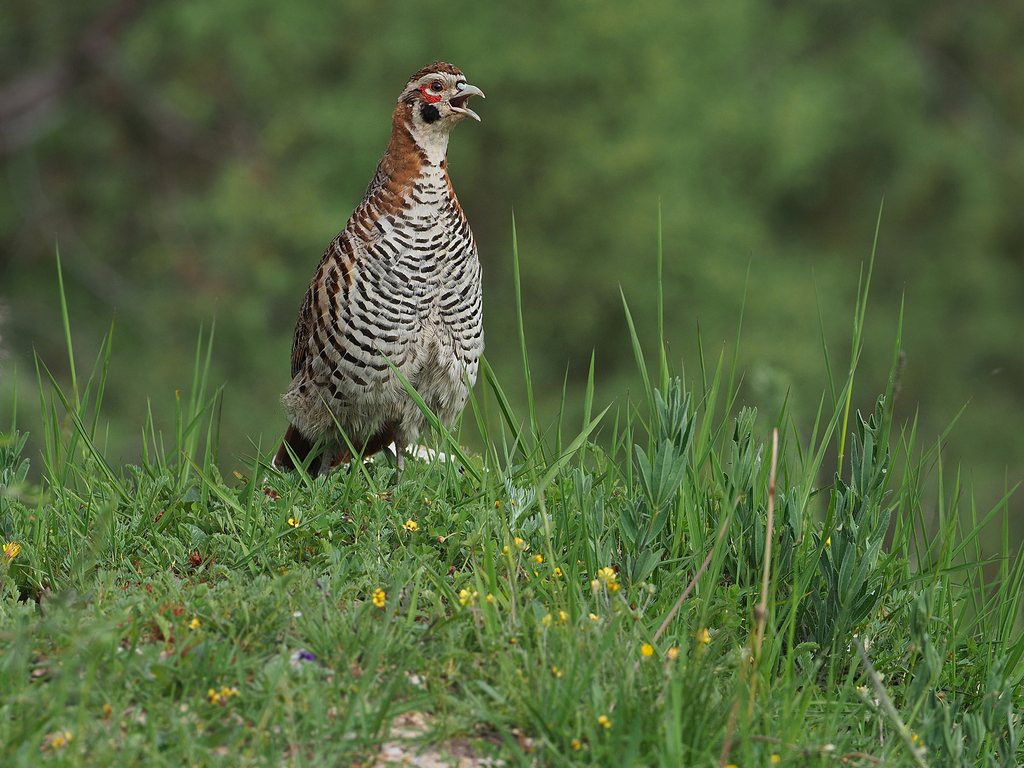
Photo: no rights reserved · CC0
Perdix hodgsoniae
Basic stats
Diet
Seeds; young birds take insects
Habitat
Sparsely vegetated high-altitude ground, moving to lower desert plains in winter
Range
Tibetan Plateau and adjoining high Himalaya
Size
28–31cm
The Tibetan partridge is a 28–31 cm gamebird that differs somewhat from other Perdix partridges: it has the brown back, blackish belly patch and chestnut flanks of its relatives but a striking black and white face pattern that contrasts with a rufous collar. The forehead, broad supercilium, face and throat are white, with a broad black stripe down the face from below the eyes and a broad chestnut hind-neck collar. The upperparts are buff barred with rufous and black. Neither sex has spurs (Wikipedia, general species account).
It is found widely across the Tibetan Plateau and shows some variation in plumage between populations. It forages on the ground in sparsely vegetated high-altitude country, in pairs in summer and in larger groups outside the breeding season. It is non-migratory but moves to lower desert plains in winter and may go up to the snow line in summer. It eats seeds, though young birds need insects as an essential source of protein. The cached account gives no detail specific to India; SoIB 2023 lists it as a resident of alpine and cold desert but assigns no priority category (Wikipedia, general species account; SoIB 2023).
Quick answers
- What does the Tibetan Partridge eat?
- Seeds; young birds take insects
- What habitat does the Tibetan Partridge live in?
- Sparsely vegetated high-altitude ground, moving to lower desert plains in winter
- Where is the Tibetan Partridge found?
- Tibetan Plateau and adjoining high Himalaya
- How big is the Tibetan Partridge?
- 28–31cm