
 Wildlife
of India
Beach Stone-curlew
Shorebirds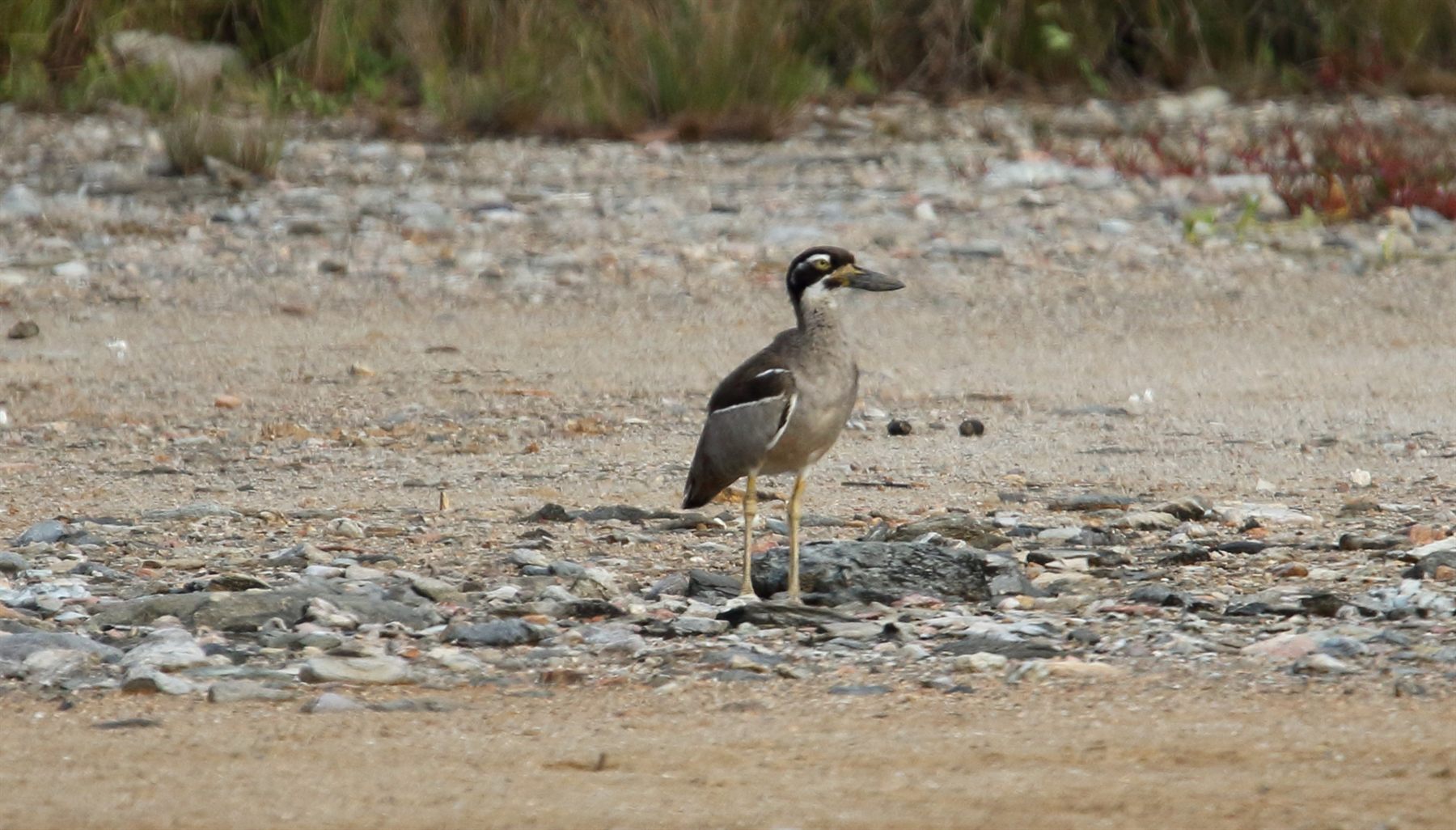
Photo: Dominic Sherony · CC BY-SA 2.0 (May be cropped or resized)
Esacus magnirostris
Basic stats
Diet
Invertebrates, mostly crabs, foraged on low-tide muddy sand
Habitat
Beaches and coasts
Range
Australasia and the islands of south-east Asia
Size
54–56cm
Weight
About 1kg
The beach stone-curlew, or beach thick-knee, is a large ground-dwelling bird, 54–56 cm long and averaging about 1 kg, one of the world's largest shorebirds and the heaviest living member of the Charadriiformes outside the gulls and skuas. It has black and white face patterning, yellow eyes and a grey-brown upper body. It occurs in Australasia and the islands of south-east Asia (Wikipedia, general species account).
It is less strictly nocturnal than most stone-curlews and can sometimes be seen foraging by day, moving slowly and deliberately with occasional short runs. It forages on muddy sand at low tide for invertebrates, mostly crabs. The breeding season spans September to November, and both parents care for the young until they are 7–12 months old. The cached account does not describe its occurrence in India; SoIB 2023 lists it as a resident of islands that eats invertebrates, without a priority category (Wikipedia, general species account; SoIB 2023).
Quick answers
- What does the Beach Stone-curlew eat?
- Invertebrates, mostly crabs, foraged on low-tide muddy sand
- What habitat does the Beach Stone-curlew live in?
- Beaches and coasts
- Where is the Beach Stone-curlew found?
- Australasia and the islands of south-east Asia
- How big is the Beach Stone-curlew?
- 54–56cm
- How much does the Beach Stone-curlew weigh?
- About 1kg