
 Wildlife
of India
Common Blackbird
Thrushes, Chats & Flycatchers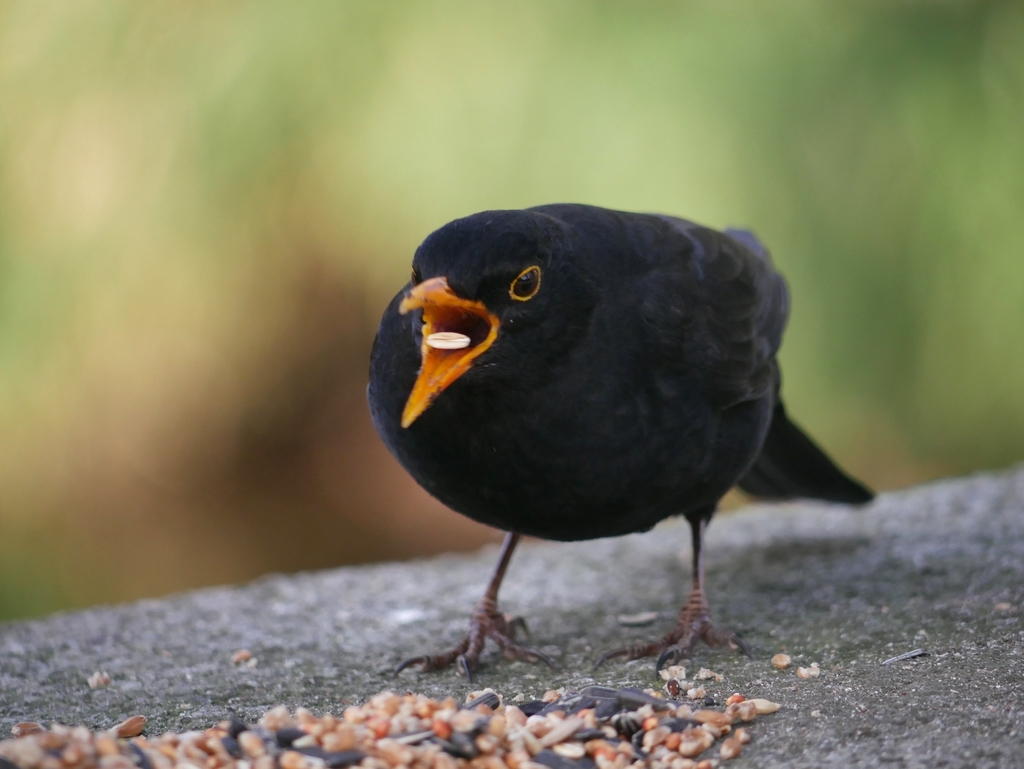
Photo: (c) Alexis Tinker-Tsavalas, some rights reserved (CC BY) · CC BY 4.0 (May be cropped or resized)
Turdus merula
Basic stats
Diet
Insects, earthworms, berries and fruits
Habitat
Woods and gardens; neat cup nest bound with mud
Range
Breeds in Europe, western Asia and North Africa; introduced to Australia and New Zealand
Incubation period
12–14 days, by the female
Size
23.5–29cm (nominate)
Weight
80–125g (nominate)
The common, or Eurasian, blackbird is a true thrush that breeds in Europe, western Asia and North Africa and has been introduced to Australia and New Zealand. The nominate subspecies is 23.5–29 cm long with a long tail and weighs 80–125 g. The adult male is all black except for a yellow eye ring and bill and has a rich, melodious song, while the adult female and juvenile have mainly dark brown plumage. Depending on latitude it may be resident, partially migratory or fully migratory (Wikipedia, general species account).
The Indian blackbird, the Tibetan blackbird and the Chinese blackbird were formerly treated as subspecies of the common blackbird; the nominate may begin breeding in March, but the eastern and Indian races start a month or more later, and eggs of the southern Indian races are paler than those from the northern subcontinent and Europe. It breeds in woods and gardens in neat cup-shaped nests bound together with mud, and is omnivorous, eating insects, earthworms, berries and fruits. The female incubates the eggs for 12–14 days. The species is not in SoIB 2023 as a separate category, so its place on the Indian list should be checked (Wikipedia, general species account).
Quick answers
- What does the Common Blackbird eat?
- Insects, earthworms, berries and fruits
- What habitat does the Common Blackbird live in?
- Woods and gardens; neat cup nest bound with mud
- Where is the Common Blackbird found?
- Breeds in Europe, western Asia and North Africa; introduced to Australia and New Zealand
- How long are the eggs of the Common Blackbird incubated?
- 12–14 days, by the female
- How big is the Common Blackbird?
- 23.5–29cm (nominate)
- How much does the Common Blackbird weigh?
- 80–125g (nominate)