
 Wildlife
of India
Common Water Monitor
Monitor Lizards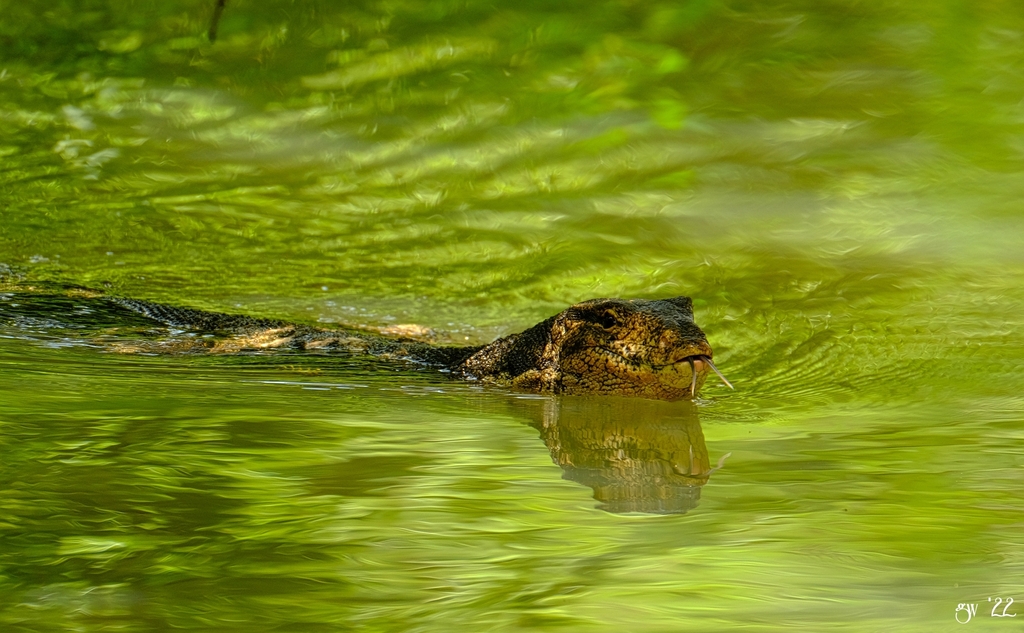
Photo: (c) Martin Gutewort, some rights reserved (CC BY) · CC-BY (May be cropped or resized)
Varanus salvator
Basic stats
Diet
Fish, frogs, rodents, birds and eggs, crabs, molluscs, insects, other lizards and snakes
Habitat
Lakes, rivers, swamps, mangroves, city parks and canals; recorded to 1,800m
Range
Eastern and north-eastern India, Bangladesh, the Andaman and Nicobar Islands, Sri Lanka, South-east Asia and southern China to Sulawesi
Clutch size
10–40 eggs
Incubation period
6–7 months
Size
Adults rarely exceed 1.5–2m
The Asian water monitor, or common water monitor, is widely considered the second-largest lizard after the Komodo dragon and is one of the most widespread monitors. It is semi-aquatic and opportunistic, living around lakes, rivers, swamps and mangroves and also in city parks, sewers and urban waterways, and has been recorded to 1,800 m. Adults rarely exceed 1.5–2 m, though the largest specimen on record from Sri Lanka measured 3.21 m, and a common mature weight is 19.5 kg (Wikipedia, general species account).
It is an excellent swimmer, steering with the raised fin of its tail, and climbs trees to escape predators such as the king cobra. It is carnivorous and eats a wide range of prey, from fish, frogs, rodents, birds and eggs to crabs, molluscs, other lizards and snakes. Breeding is from April to October, with 10 to 40 eggs laid in rotting logs or stumps and incubated for 6 to 7 months. In India it is distributed from the east and north-east (the Reptile Database lists Assam, Mizoram, Nagaland, Tripura and the Andaman and Nicobar Islands).
Quick answers
- What does the Common Water Monitor eat?
- Fish, frogs, rodents, birds and eggs, crabs, molluscs, insects, other lizards and snakes
- What habitat does the Common Water Monitor live in?
- Lakes, rivers, swamps, mangroves, city parks and canals; recorded to 1,800m
- Where is the Common Water Monitor found?
- Eastern and north-eastern India, Bangladesh, the Andaman and Nicobar Islands, Sri Lanka, South-east Asia and southern China to Sulawesi
- How many eggs does the Common Water Monitor lay?
- 10–40 eggs
- How long are the eggs of the Common Water Monitor incubated?
- 6–7 months
- How big is the Common Water Monitor?
- Adults rarely exceed 1.5–2m