
 Wildlife
of India
Little Crake
Cranes, Rails & Bustards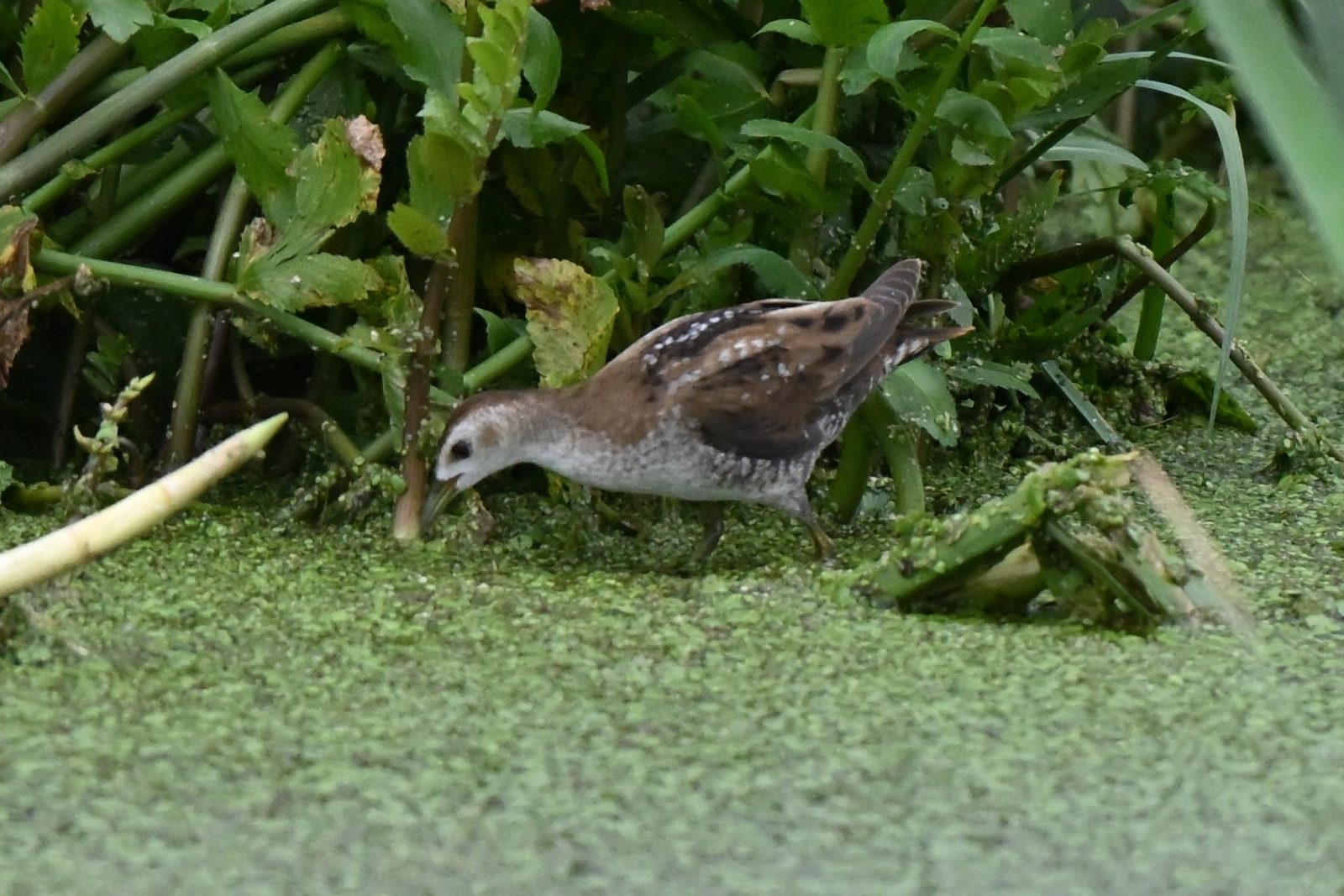
Photo: (c) Oscar Hazell, some rights reserved (CC BY) · CC-BY (May be cropped or resized)
Zapornia parva
Basic stats
Diet
Insects and aquatic animals
Habitat
Reed beds in the breeding season
Range
Breeds in Europe (mainly the east) and just into western Asia; winters in Africa
Clutch size
4–7 eggs
Size
17–19cm
The little crake is a very small waterbird of the rail family, 17–19 cm long, slightly smaller than the spotted crake, from which it is readily told by lacking dark barring and white spots on the flanks. The bill is short and straight, yellow with a red base, the legs are green with long toes, and the short tail is barred black and white underneath. Unlike other Zapornia crakes it shows strong sexual dimorphism: males have mainly brown upperparts and a blue-grey face and underparts (Wikipedia, general species account).
It breeds in reed beds in Europe, mainly in the east, and just into western Asia, nesting in a dry spot in reed vegetation with four to seven eggs. It is migratory, wintering in Africa. It mainly eats insects and aquatic animals. Very secretive in the breeding season, it is mostly heard rather than seen, with a yapping kua call, and easier to see on migration. SoIB 2023 lists it as a winter migrant of wetland that eats a mixed diet, without a priority category (Wikipedia, general species account; SoIB 2023).
Quick answers
- What does the Little Crake eat?
- Insects and aquatic animals
- What habitat does the Little Crake live in?
- Reed beds in the breeding season
- Where is the Little Crake found?
- Breeds in Europe (mainly the east) and just into western Asia; winters in Africa
- How many eggs does the Little Crake lay?
- 4–7 eggs
- How big is the Little Crake?
- 17–19cm