
 Wildlife
of India
Red-headed Bunting
Finches, Sparrows & Buntings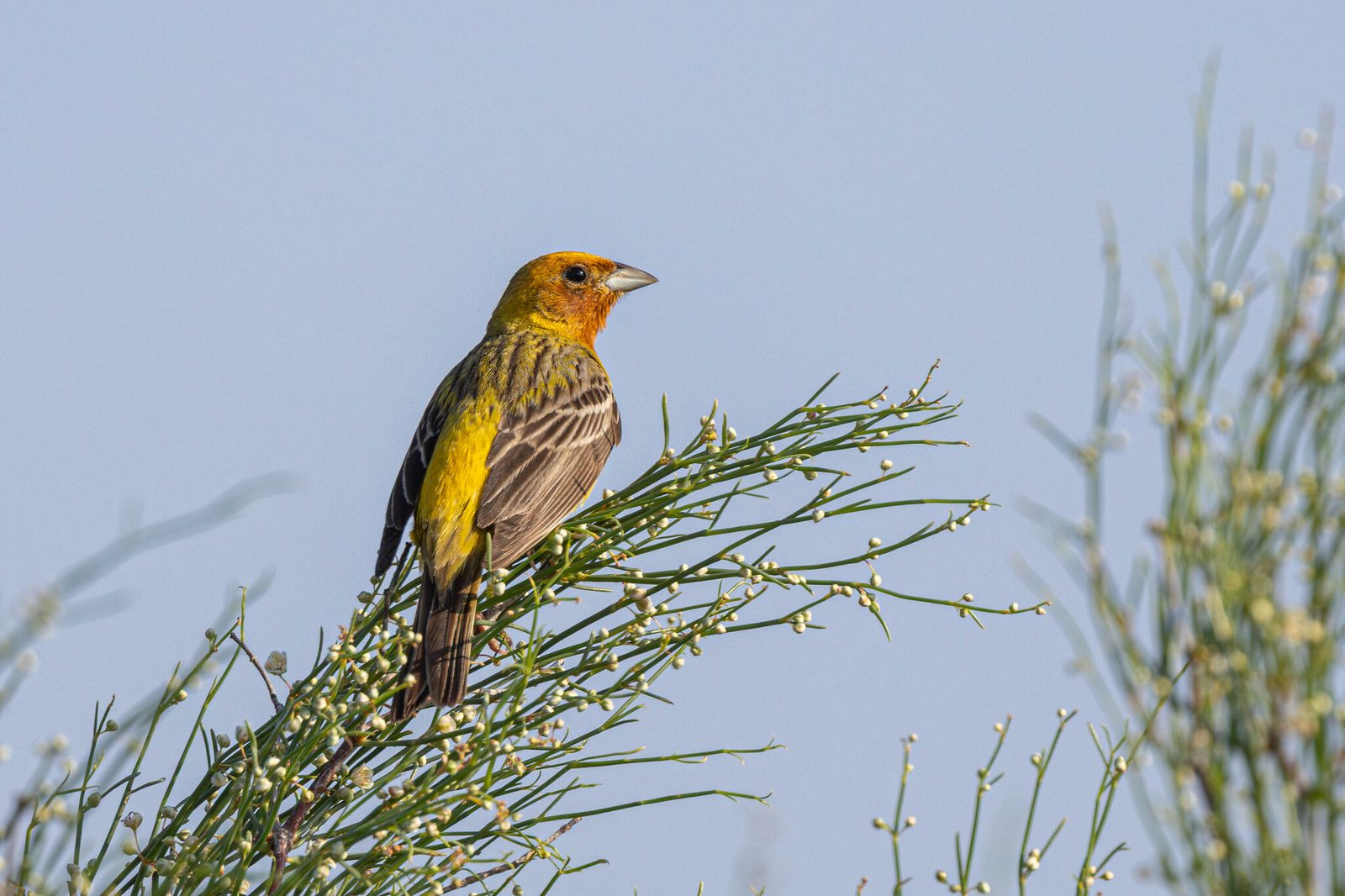
Photo: (c) Антон Лабачоў, some rights reserved (CC BY) · CC-BY (May be cropped or resized)
Melophus bruniceps
Also known as: Emberiza bruniceps
Basic stats
Diet
Seeds; insects when feeding young
Habitat
Open scrubby areas including agricultural land; nest in a tree or bush
Range
Breeds in central Asia: Afghanistan, Iran, Kazakhstan, Kyrgyzstan, Mongolia, Russia, Tajikistan, Turkmenistan, Uzbekistan and China; winters in India and Bangladesh
Clutch size
3–5 eggs
Size
17cm
The red-headed bunting is a passerine of the bunting family, 17 cm long, larger than a reed bunting, with a long tail. The breeding male has bright yellow underparts, green upperparts and a brownish-red face and breast. It breeds in open scrubby areas including agricultural land in central Asia, in Afghanistan, Iran, Kazakhstan, Kyrgyzstan, Mongolia, Russia, Tajikistan, Turkmenistan, Uzbekistan and China, and is migratory, wintering in India and Bangladesh (Wikipedia, general species account).
It lays three to five eggs in a nest in a tree or bush, and its natural food is seeds, or insects when feeding young. Its status in western Europe, where it is a vagrant, has been confused by escapes from captivity. SoIB 2023 rates it a Low conservation priority, a winter migrant of open habitat that eats plants and seeds, with a Large range of about 389,000 km², a decline of about 47% over the long term and an inconclusive current trend of about +21% a year (Wikipedia, general species account; SoIB 2023).
Quick answers
- What does the Red-headed Bunting eat?
- Seeds; insects when feeding young
- What habitat does the Red-headed Bunting live in?
- Open scrubby areas including agricultural land; nest in a tree or bush
- Where is the Red-headed Bunting found?
- Breeds in central Asia: Afghanistan, Iran, Kazakhstan, Kyrgyzstan, Mongolia, Russia, Tajikistan, Turkmenistan, Uzbekistan and China; winters in India and Bangladesh
- How many eggs does the Red-headed Bunting lay?
- 3–5 eggs
- How big is the Red-headed Bunting?
- 17cm