
 Wildlife
of India
Black-headed Bunting
Finches, Sparrows & Buntings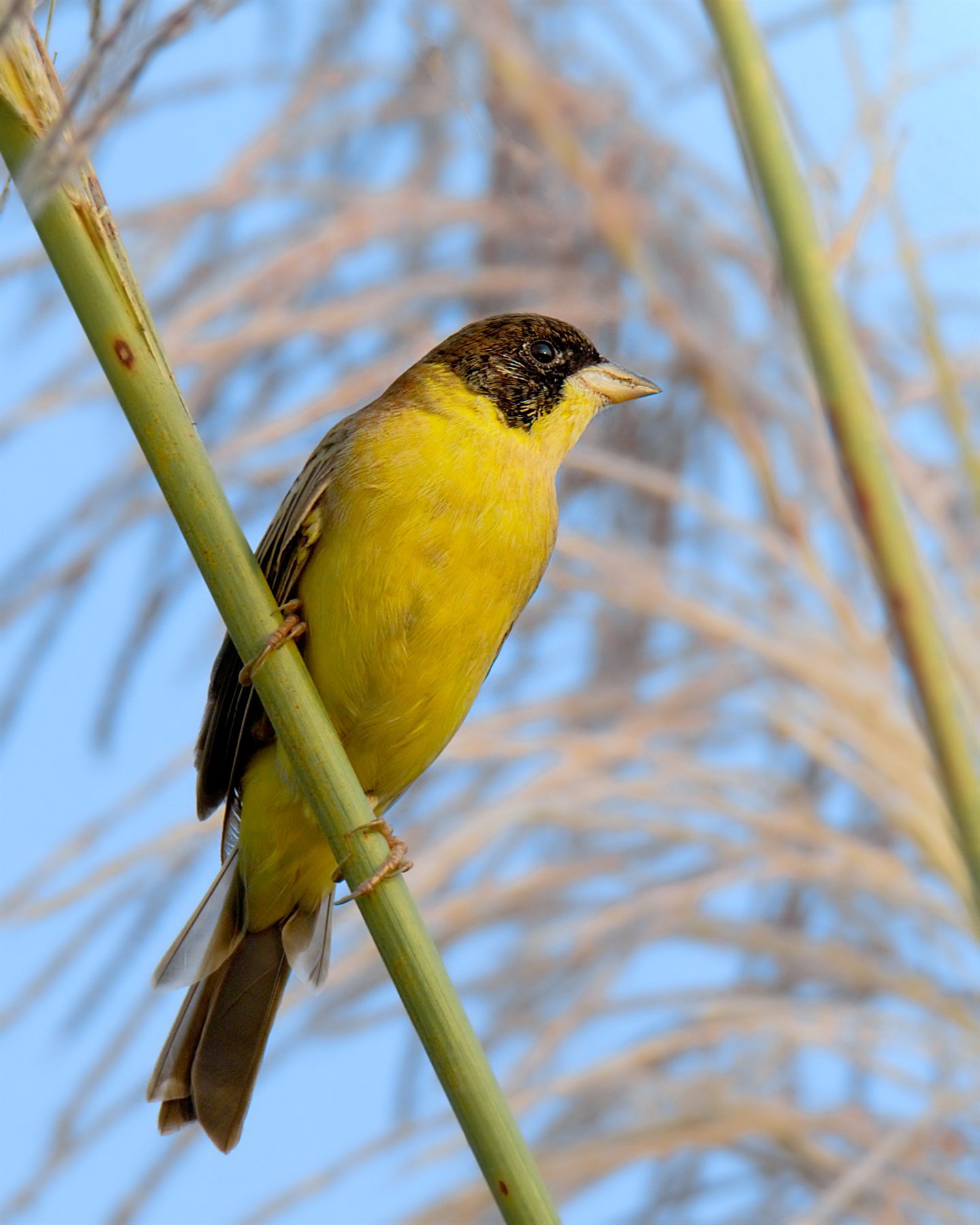
Photo: Mdkshots · CC BY-SA 4.0 (May be cropped or resized)
Melophus melanocephalus
Also known as: Emberiza melanocephala
Basic stats
Diet
Plants and seeds (SoIB guild)
Habitat
Open scrubby areas including agricultural land; large communal roosts in thorny acacia trees in winter
Range
Breeds from south-east Europe east to Iran; winters mainly in India, in the west and north extending south to northern Karnataka
Clutch size
4–6 eggs
Incubation period
About 13 days; chicks fledge after about 10 days
Size
15cm
The black-headed bunting is a passerine of the bunting family, 15 cm long, larger than a reed bunting, with a long tail. Adult males are well marked with yellow underparts, a chestnut back and a black head; adult females in breeding plumage look like duller males, and in other plumages can be hard to separate from the closely related red-headed bunting, with which it hybridises naturally in the zone of overlap in northern Iran. It breeds in south-east Europe east to Iran and migrates in winter mainly to India, with some birds moving into south-east Asia, its winter range in India mainly in the west and north, extending south to northern Karnataka (Wikipedia, general species account).
It breeds in open scrubby areas including agricultural land. Males form pure flocks during migration and arrive in the winter quarters well before the females, and in winter they form large communal roosts in thorny acacia trees, often with other species such as the yellow-throated sparrow. The longest migration noted from a ringed bird is about 7,000 km. The clutch is four to six eggs, hatching after about 13 days. SoIB 2023 rates it a Low conservation priority, a winter migrant of open habitat that eats plants and seeds, with a Large range of about 492,000 km² (Wikipedia, general species account; SoIB 2023).
Quick answers
- What does the Black-headed Bunting eat?
- Plants and seeds (SoIB guild)
- What habitat does the Black-headed Bunting live in?
- Open scrubby areas including agricultural land; large communal roosts in thorny acacia trees in winter
- Where is the Black-headed Bunting found?
- Breeds from south-east Europe east to Iran; winters mainly in India, in the west and north extending south to northern Karnataka
- How many eggs does the Black-headed Bunting lay?
- 4–6 eggs
- How long are the eggs of the Black-headed Bunting incubated?
- About 13 days; chicks fledge after about 10 days
- How big is the Black-headed Bunting?
- 15cm