
 Wildlife
of India
Snow Partridge
Pheasants, Partridges & Quails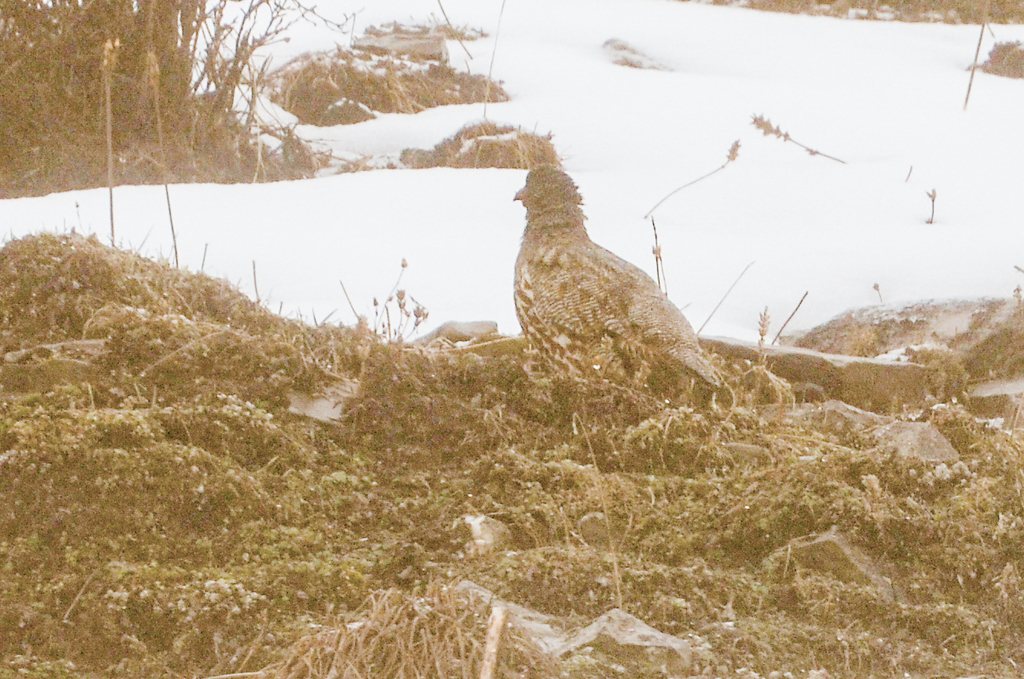
Photo: (c) Jay Pruett, some rights reserved (CC BY) · CC-BY (May be cropped or resized)
Lerwa lerwa
Basic stats
Diet
Mosses, lichens, berries and plant shoots
Habitat
Alpine pastures and open hillside above the treeline
Range
High Himalaya of Pakistan, India, Nepal and China
Clutch size
3–5 eggs
Size
38–40cm
Weight
Females 450–580g; males 550–700g
The snow partridge is the only species in its genus. It looks grey above and chestnut below, with a bright red bill and legs, the upperparts finely barred in black and white and a dark, white-barred 14-feathered tail. It is 38–40 cm long, with females weighing 450–580 g and males 550–700 g. Sexes look alike but males have a spur on the tarsus. Young birds are mottled below and less clearly barred (Wikipedia, general species account).
It is found in the high-altitude Himalaya of Pakistan, China, India and Nepal, in alpine pastures and on open hillsides above the treeline, but not on such bare rocky ground as the Himalayan snowcock, and it is less wary. It lives in small groups, usually six to eight but up to 30 outside the breeding season, and is said to feed on mosses, lichens, berries and plant shoots. The breeding season is May to July, with three to five pale yellow, slightly glossy eggs, the female incubating while the male stands guard. SoIB 2023 lists it as a resident and altitudinal migrant of alpine and cold desert; it does not assign a priority category (Wikipedia, general species account; SoIB 2023).
Quick answers
- What does the Snow Partridge eat?
- Mosses, lichens, berries and plant shoots
- What habitat does the Snow Partridge live in?
- Alpine pastures and open hillside above the treeline
- Where is the Snow Partridge found?
- High Himalaya of Pakistan, India, Nepal and China
- How many eggs does the Snow Partridge lay?
- 3–5 eggs
- How big is the Snow Partridge?
- 38–40cm
- How much does the Snow Partridge weigh?
- Females 450–580g; males 550–700g