
 Wildlife
of India
Western Red Panda
Bears, Dogs, Otters & Red Panda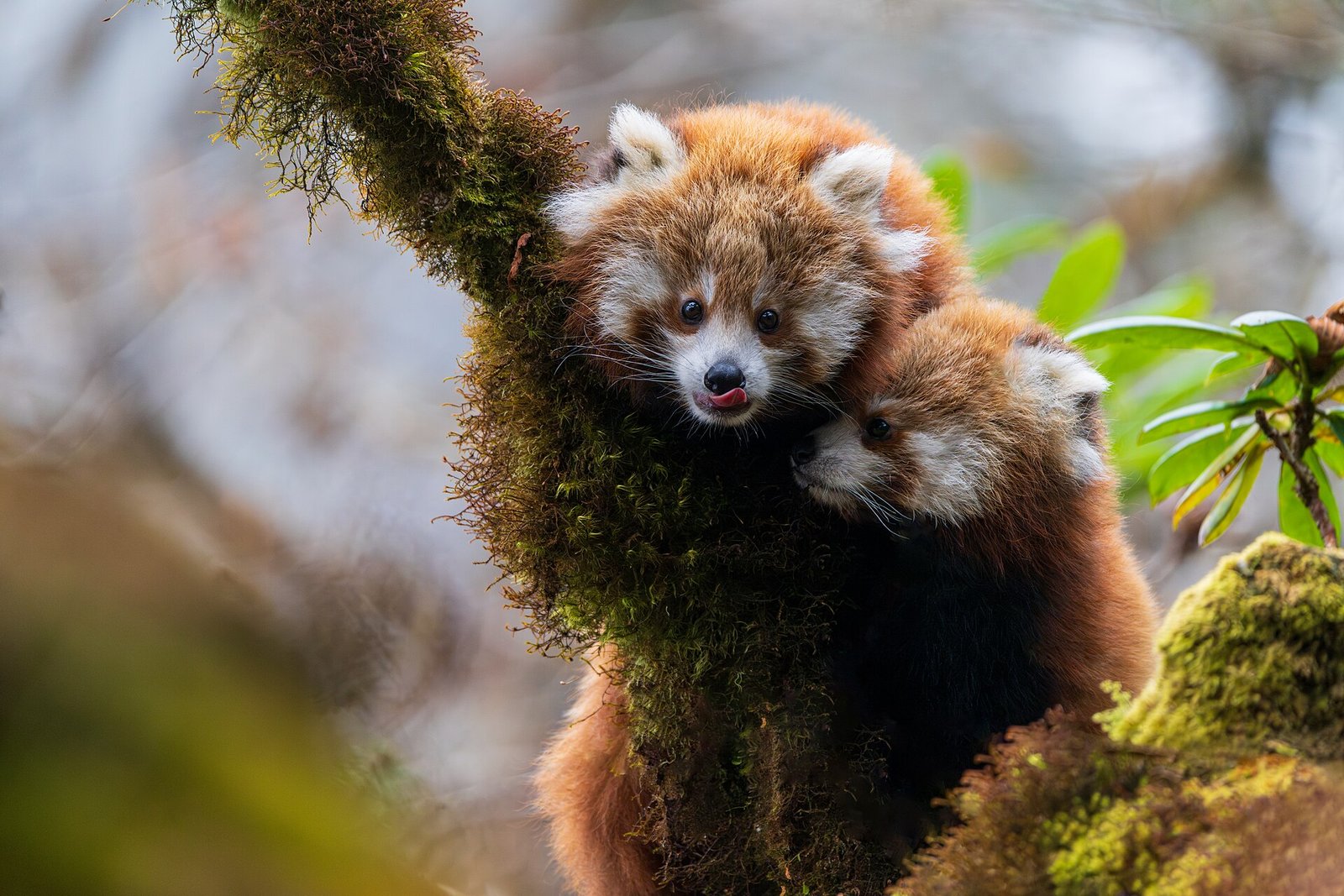
Photo: Sunuwargr · CC BY-SA 4.0 (May be cropped or resized)
Ailurus fulgens
Basic stats
Diet
Mainly bamboo leaves and shoots; also fruit, blossoms, acorns, eggs, birds and small mammals
Habitat
Temperate conifer and cool broadleaf forest with dense bamboo undergrowth, about 2,300–4,000m (Dalui et al. 2020)
Range
Sikkim, northern West Bengal (Darjeeling and Kalimpong hills) and Arunachal Pradesh
Size
Head and body 51–63.5cm; tail 28–48.5cm
Weight
3.2–9.4kg (Himalayan red panda)
The red panda is a cat-sized, tree-dwelling mammal with a thick red to orange-brown coat, black belly and legs, and a white face with white brows, cheeks and ear rims. Its long, bushy tail is ringed in red and buff and ends in a dark tip. The colours blend surprisingly well with the red moss and pale lichen on Himalayan trees. Like the giant panda, which it is not closely related to, it has a 'false thumb', an extended wrist bone that helps it grip bamboo stems (Wikipedia, general species account).
Across its range the red panda feeds mostly on bamboo leaves, which may be almost its only food in winter, and adds fruit, blossoms, acorns and the odd egg, bird or small mammal. It is active mainly at night and around dawn and dusk, and spends much of its time in trees, sprawled along a branch with its legs dangling in warm weather or curled up with its tail over its face in the cold. It is shy and hard to watch in the wild, so much of what is known about its behaviour comes from captive animals (Wikipedia, general species account).
In India the red panda lives in the eastern Himalaya. A genetic study in the Kangchenjunga landscape of Sikkim and northern West Bengal identified 24 individuals from 234 droppings and mapped about 1,310 km² of suitable habitat, 62% of it inside protected areas such as Singalila and Neora Valley national parks and Sikkim's sanctuaries. Red pandas still move between these populations, but the authors warn that development outside protected areas threatens the corridors (Dalui et al. 2020).
Quick answers
- What does the Western Red Panda eat?
- Mainly bamboo leaves and shoots; also fruit, blossoms, acorns, eggs, birds and small mammals
- What habitat does the Western Red Panda live in?
- Temperate conifer and cool broadleaf forest with dense bamboo undergrowth, about 2,300–4,000m (Dalui et al. 2020)
- Where is the Western Red Panda found?
- Sikkim, northern West Bengal (Darjeeling and Kalimpong hills) and Arunachal Pradesh
- How big is the Western Red Panda?
- Head and body 51–63.5cm; tail 28–48.5cm
- How much does the Western Red Panda weigh?
- 3.2–9.4kg (Himalayan red panda)