
 Wildlife
of India
Tigers of India Photo Tour 2024: Bandhavgarh and Kanha
Trip report by Cat Expeditions · June 2024
For our annual Tigers of India Photo Tour, we visited the central Indian state of Madhya Pradesh. India is the best place in the world to see tigers, due to their protection in isolated conservation areas. Besides tigers, we saw Indian leopards and Jungle cats. Read the rest of our Tigers of India Photo Tour 2024 Trip Report to get all the details!
Highlights of the 2024 Tigers of India Photo Tour
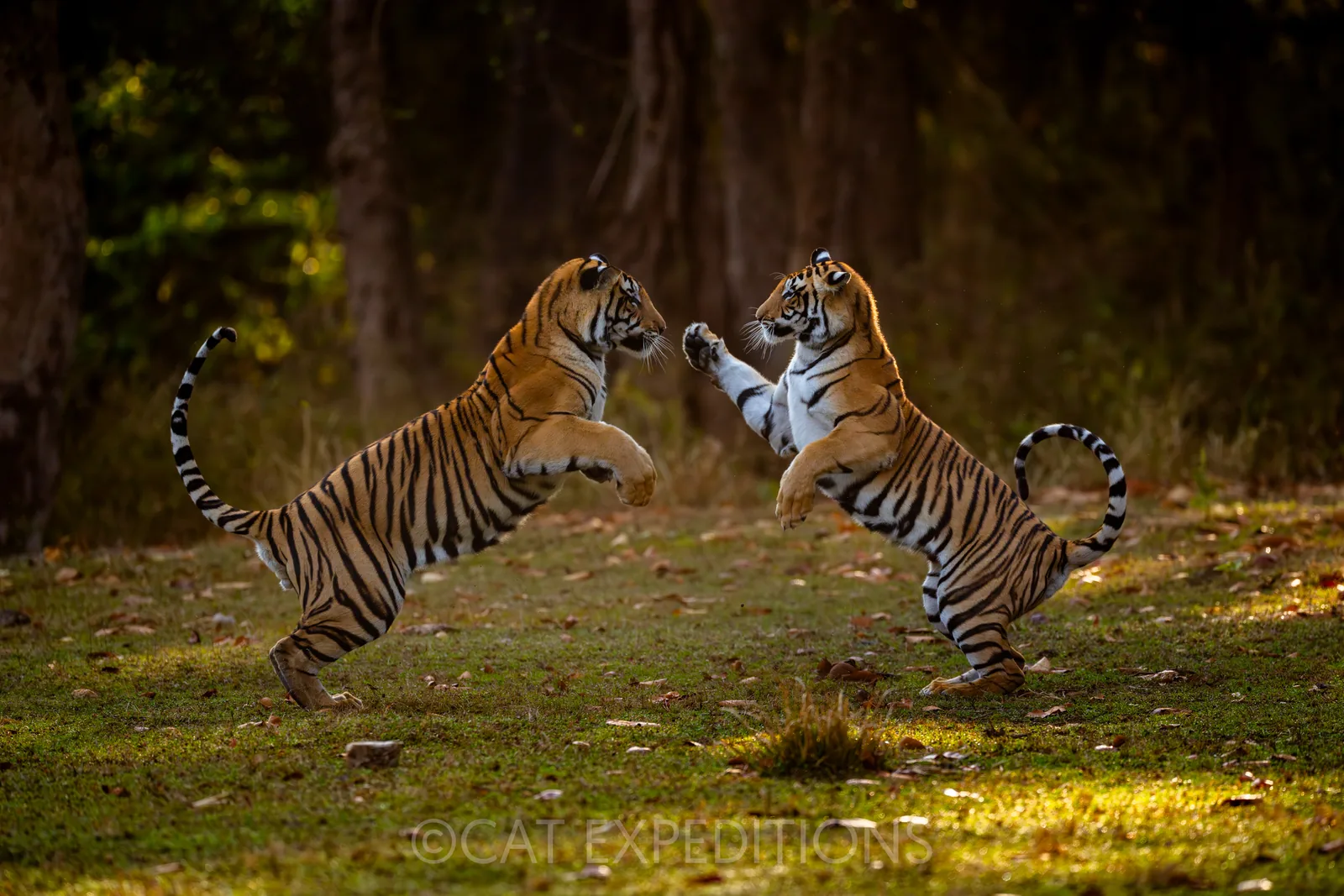
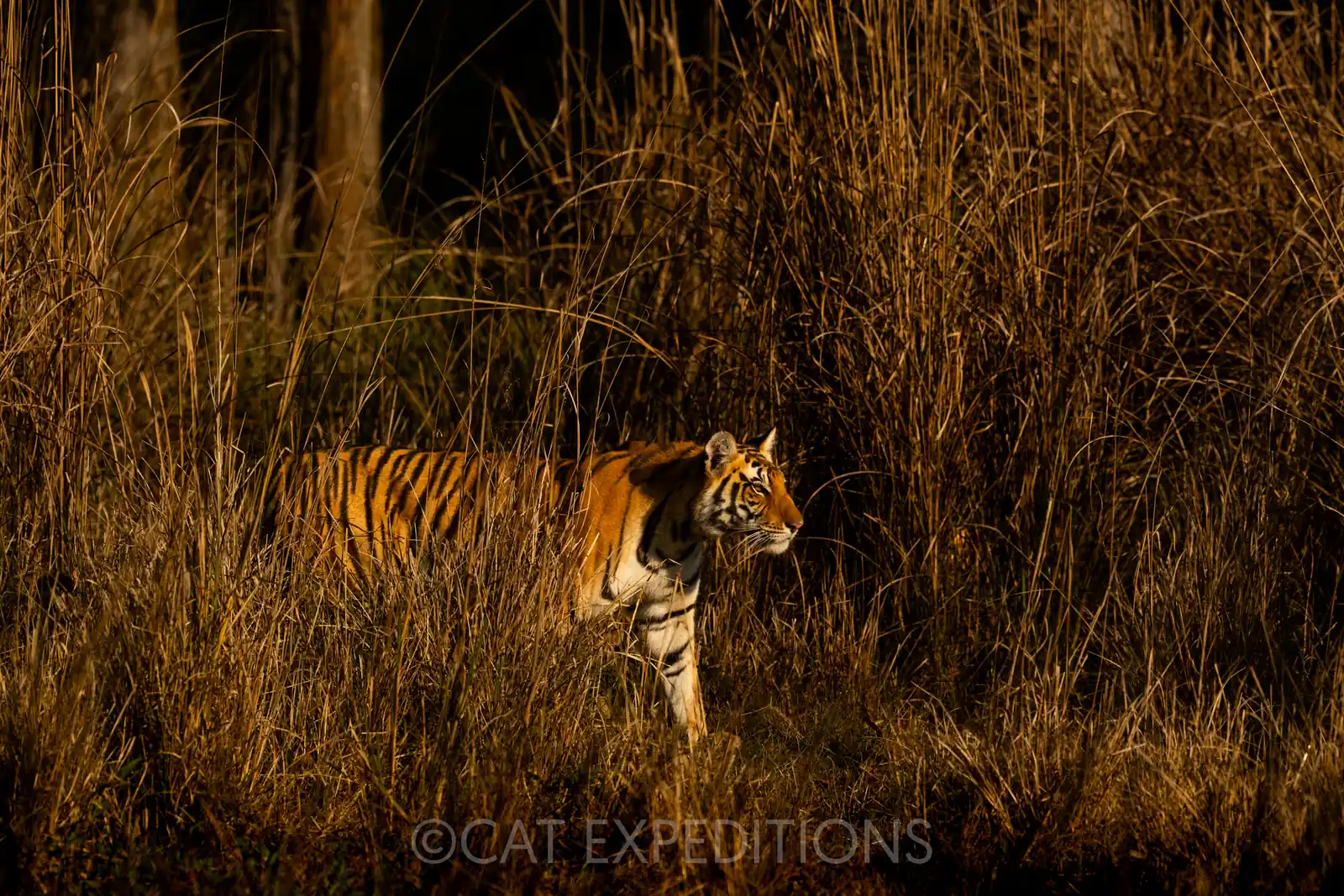
Tiger: We had 18 sightings of tigers, including several spectacular sightings with one female and her two 18-month sub-adult cubs who continued to show off their amazing behaviors, like playing together and climbing trees!
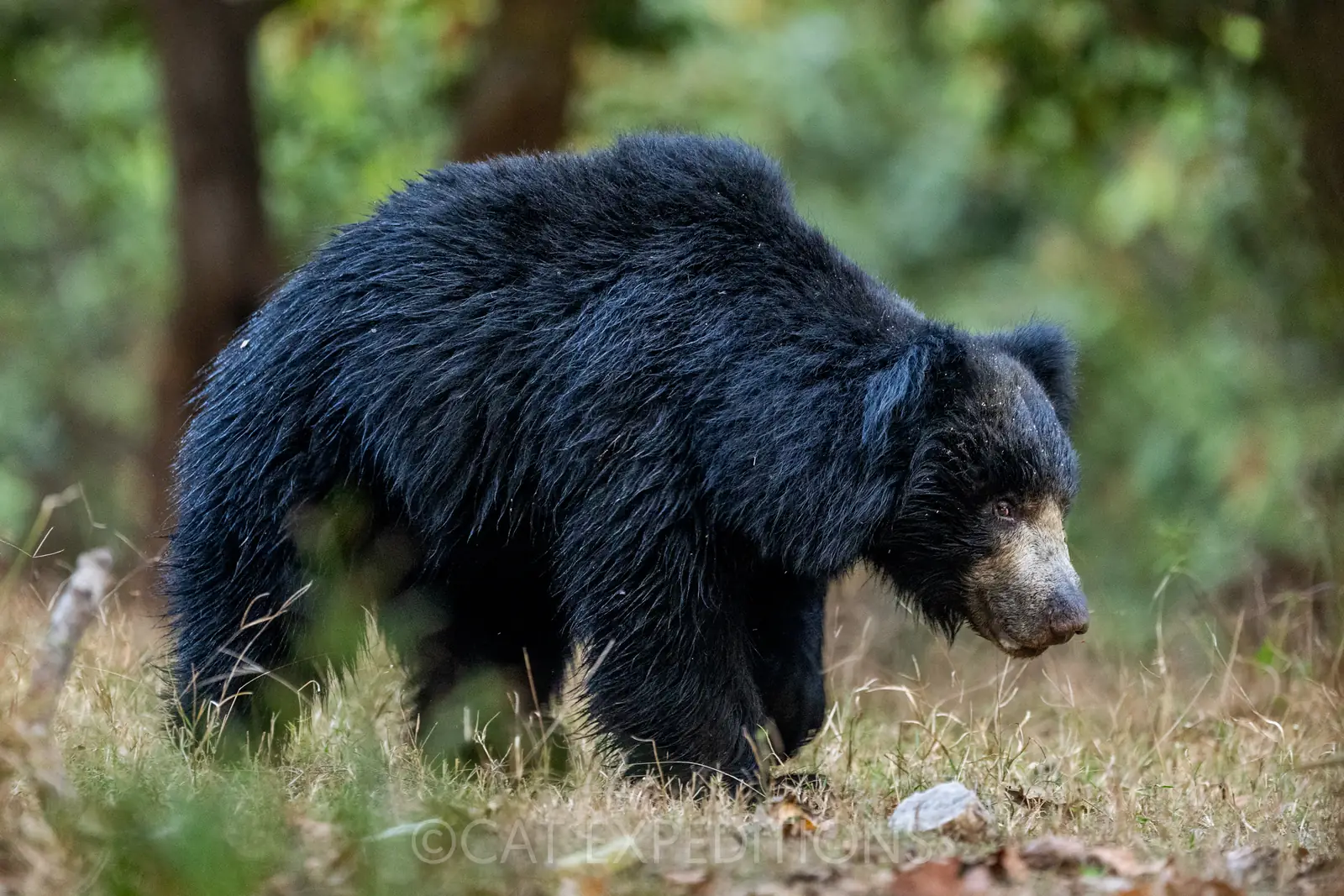
Sloth Bear: We had five sightings of sloth bear, including one very nice, extended sighting in Kanha National Park
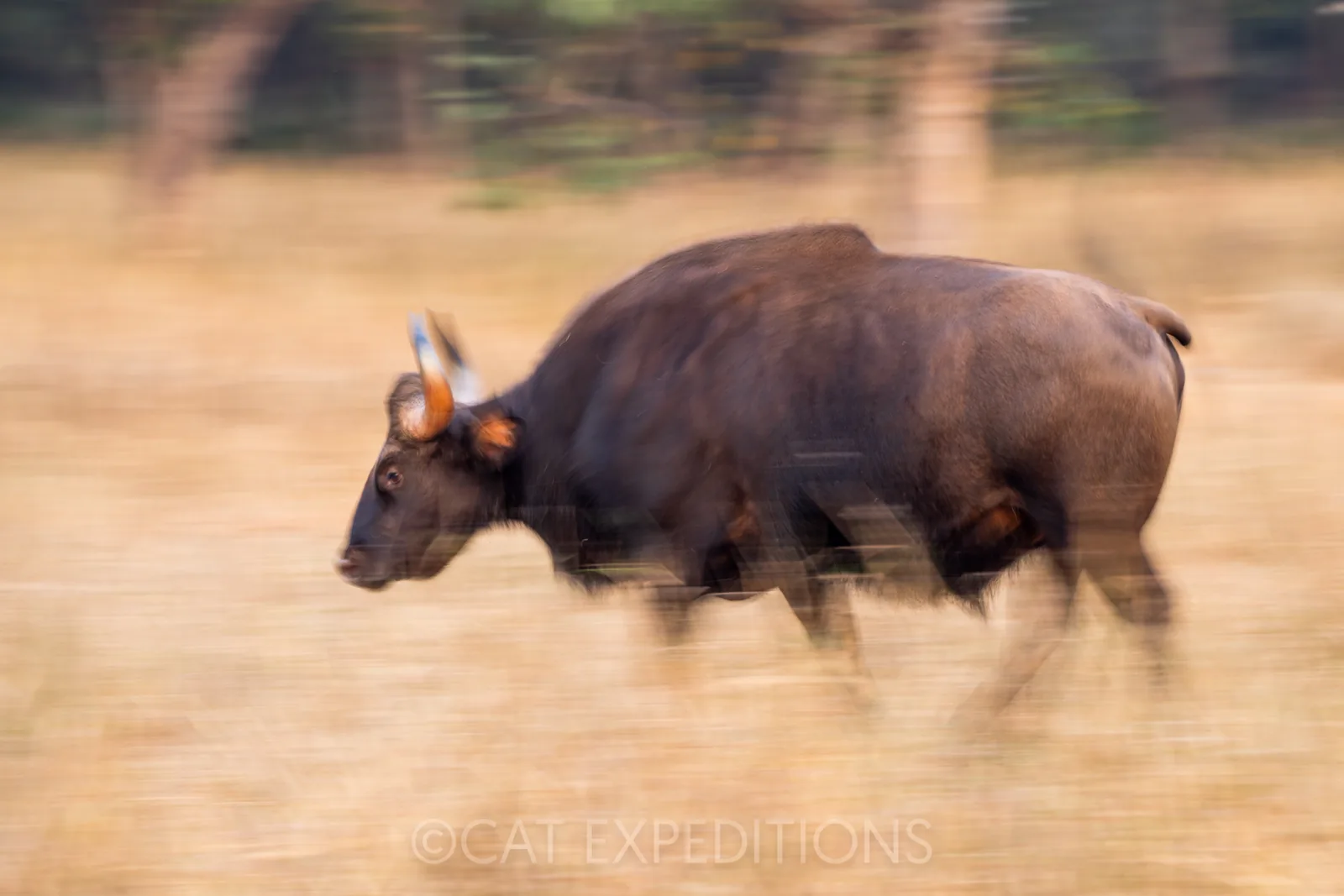
Mammals: We saw 18 mammal species total; in addition the above mammals, we were treated to several Golden Jackals (including two feeding on a fresh spotted deer leopard kill), a Blackbuck, Indian Gaur, several Nilgai, a small herd of Indian Elephant, and a fleeting glimpse of a Leopard.
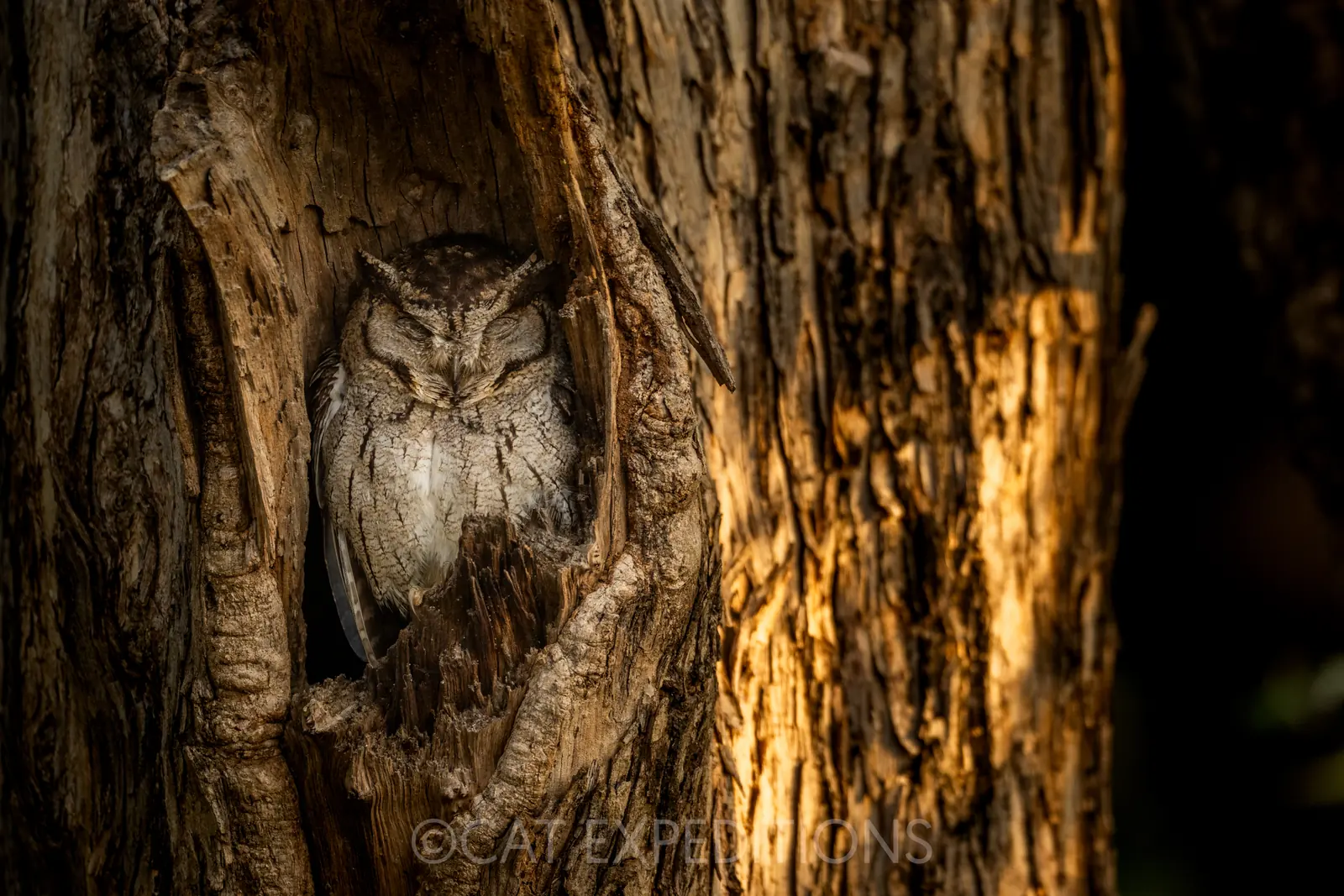
Birds: We saw 81 different bird species, including Plum-headed Parakeet, Malabar Pied-Hornbill, and Indian Scops-Owl.
Detailed Tigers of India Trip Summary 2024
Day 1: We all arrived smoothly into Delhi and settled into the lovely Andaz Delhi Hotel, where we crashed for the night.
Day 2: We kicked off with the most important meal of the day at the fabulous Andaz buffet, where we feasted on dumplings, curries, dosa and fresh juices in preparation for the day’s long journey. During breakfast we shared our introductory briefing on expectations for the trip and the species we hope to see. From there we flew to Jabalpur, a 1.5-hour flight, and drove 4 hours to Bandhavgarh National Park. We were greeted joyously by our friends and staff at Bandhavgarh Jungle Lodge, settled in and had a wonderful dinner on their candlelit rooftop before turning in.
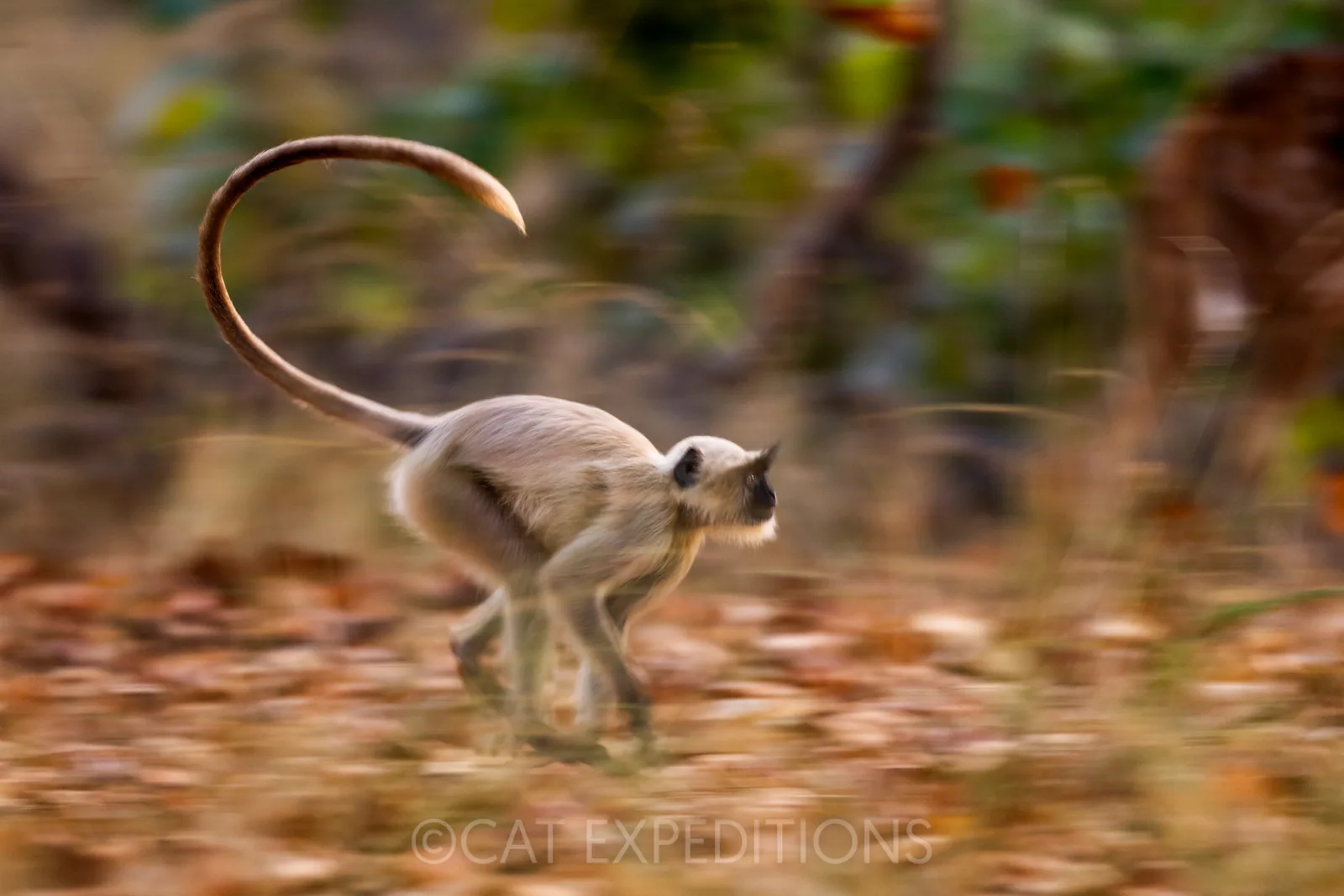
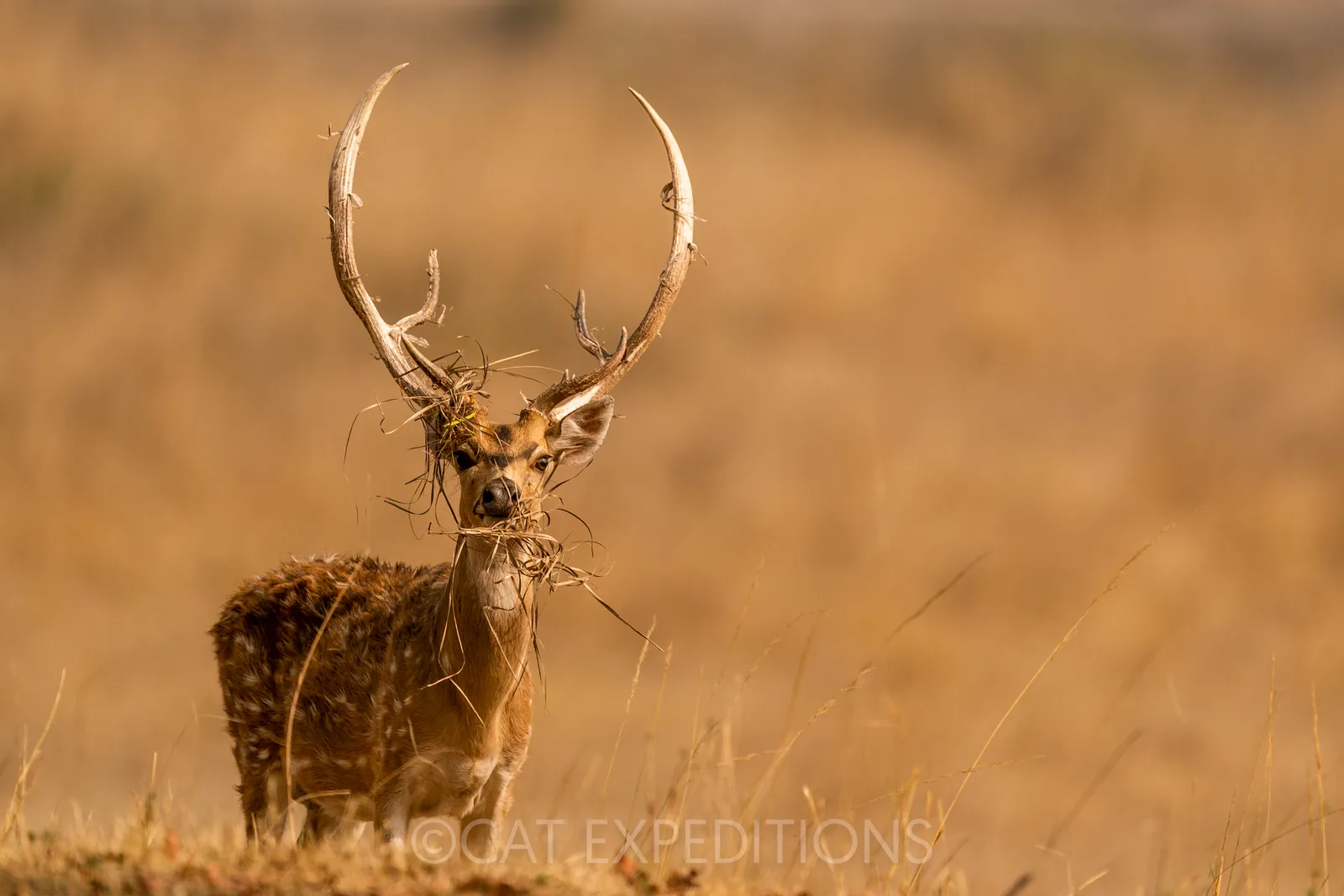
Day 3: Our first tiger safari started pre-sunrise with a early morning tea, after which we drove to the gate entrance of zone 1 in Bandhavgarh. With a full day permit in hand we were the first vehicle in the park and could enter fifteen minutes before everyone else. We immediately saw the usual suspects, including Chital and Northern Plains Gray Langur, as well as more uncommon species like Nilgai, Ruddy Mongoose, and a large herd of Gaur. In the late morning we were hit with unusual rain showers which caused all the wildlife to hunker down; we saw only a few new species for the rest of the day, including Wild Boar, Golden Jackal, and Southern Red Muntjac. Despite not seeing a tiger for the day, which is rather unusual for Bandhavgarh, we were happy with our sightings for the day, especially with the odd weather.
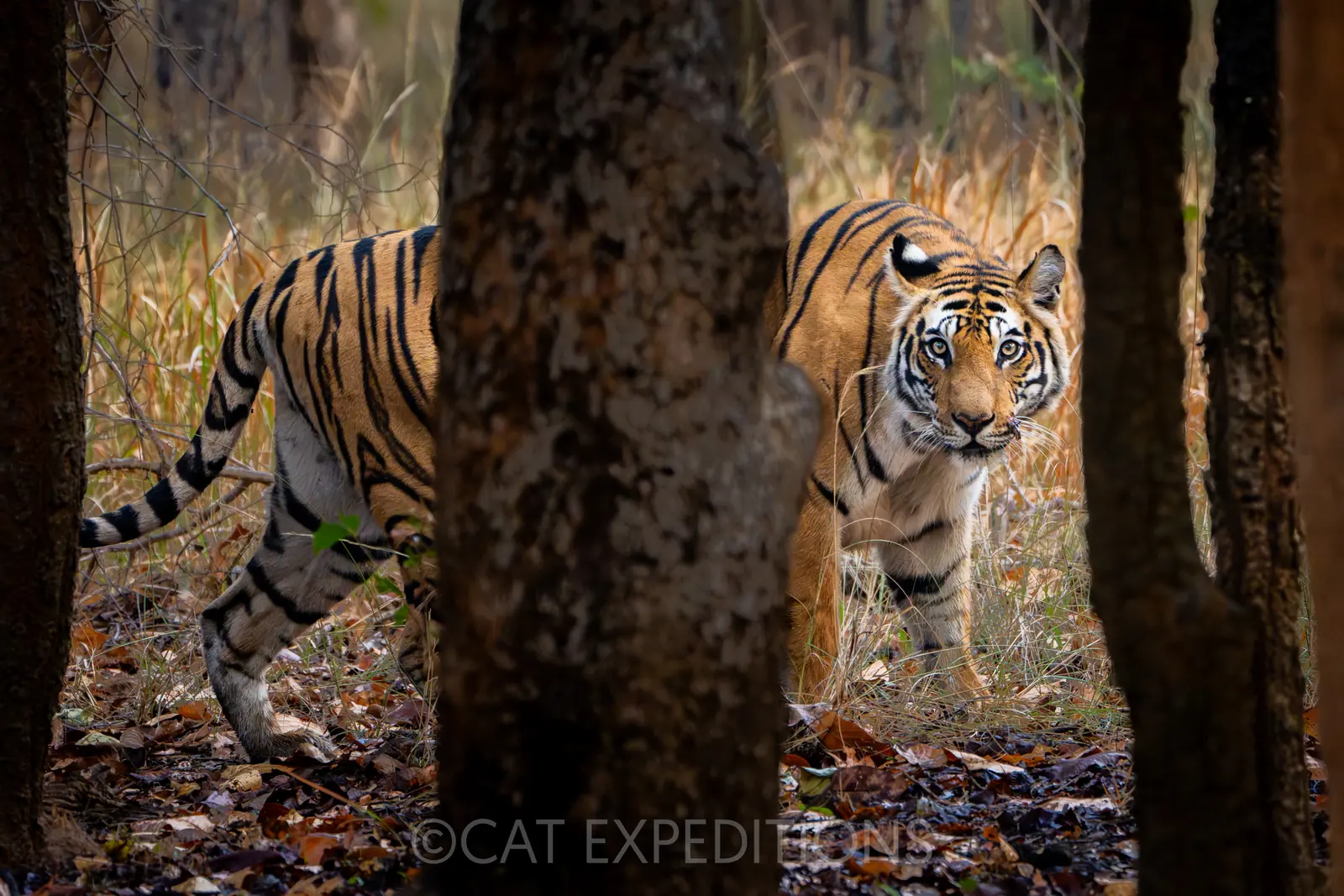
Day 4: We enjoyed the luxuries of another full day permit: 15-minutes earlier entry into the park, no requirement to return during the middle of the day, and 15-minutes extra allotted time in the park at the end of the day. After a tiger-less morning, we finally heard a roar nearby. We don’t often imagine tigers roaring, but it sounds similar to a lion’s roar, slightly deeper at times. The vocalizations came from within the forest, but we could tell the tiger was moving, so we paralleled the sound for about thirty minutes. Finally, a beautiful female tigress stepped out of the thickets into plain view. She continued vocalizing and scent marking, re-establishing dominance of her territory. This tigress is known as Dotty and we actually had seen her with cubs during our tour a year prior. As she was walked near to our jeep, we noticed a fresh wound on her mouth, probably sustained from a fight the previous night. She is a badass tiger, and could certainly hold her own in a fight. With our full-day permit, we were able to hang with her alone, after the other Jeeps had to leave the sighting, for another 15 minutes, tracing her zig-zag pattern through the trees as she re-marked all the trees she would have scent-marked likely thousands of times before.
Day 5: We woke up to torrential rains. The rainy season starts closer to May, and It is extremely unusual to have this kind of rain at this time. Nevertheless, our group decided to brave the weather in the hopes of finding another female tiger who had very very young cubs. We heard alarm calls from Chital in her territory a few times (it sounds like a high-pitched bark!), signaling she was around, but she never showed herself. Though we did not see a tiger, our perseverance did pay off with a sloth bear sighting, who was found out foraging just before dusk. Perhaps poorly named in some respect, these bears are anything but slow; they can move tremendously quickly, and are extremely powerful. However, sloth bear claws do indeed resemble sloths; we watched as it used them to turn over logs and search for grubs. As we returned to camp that evening, one of our vehicles encountered a Jungle Cat running across the road; a first for one of our guests who has been coming to India on safari for more than a decade! In addition to the great wildlife, one of our day’s highlights were the delicious momos the lodge was generous enough to make for us by special request! It was the perfect pick-me-up for another rainy day.
Day 6: In an effort to shift our tiger luck, we decided to start the day with the Tiger Dance. (We each invented a special dance move, strung it together, and performed for mother nature.) We highly recommend this strategy; it certainly worked for us!
We were on another full day permit, and spent the entire day with D1, a huge male tiger who had just killed a juvenile domestic buffalo that had wandered into the park from a nearby village in the Buffer Zone. It was a hot day and he was extremely full, so he spent the day resting and soaking in the water.
Not only was it a fabulous and long sighting with D1, but we were able to observe some of the human-wildlife interaction that becomes inevitable when humans and predators live so close to one another. The villagers who lost the predated buffalo were in search of the carcass, a requirement to receive compensation for their loss, and were searching the forest on foot. As soon as they entered the area where D1 was resting, the tiger became immediately nervous, and retreated into the bushes. Though comfortable and habituated to humans in vehicles, the presence of people on foot for him signals danger. Watching this scene unfold was a reminder that these cats live essentially on islands, protected areas where they can thrive, but surrounded by habitat loss and human development that only threatens to expand.
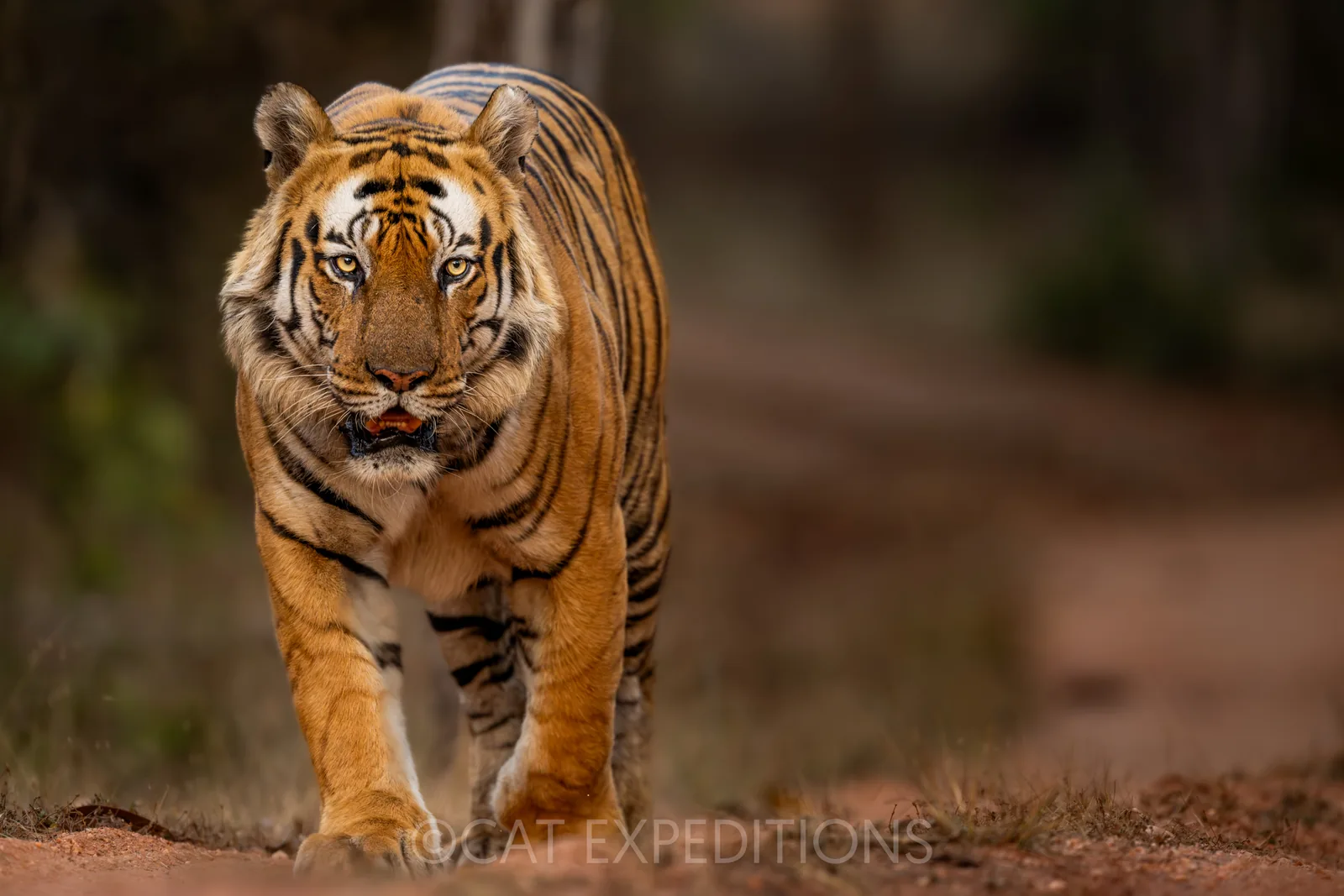
After leaving D1, we found yet another male tiger at a different waterhole, and had the sighting to ourselves for awhile. We watched as a chital buck came within just a few meters of the big cat, who awoke out of its slumber with such a surprise he gave away his position to the deer. As the temperatures cooled, he rose, scent-marked and disappeared into the forest. It was the perfect ending to a cat filled day.
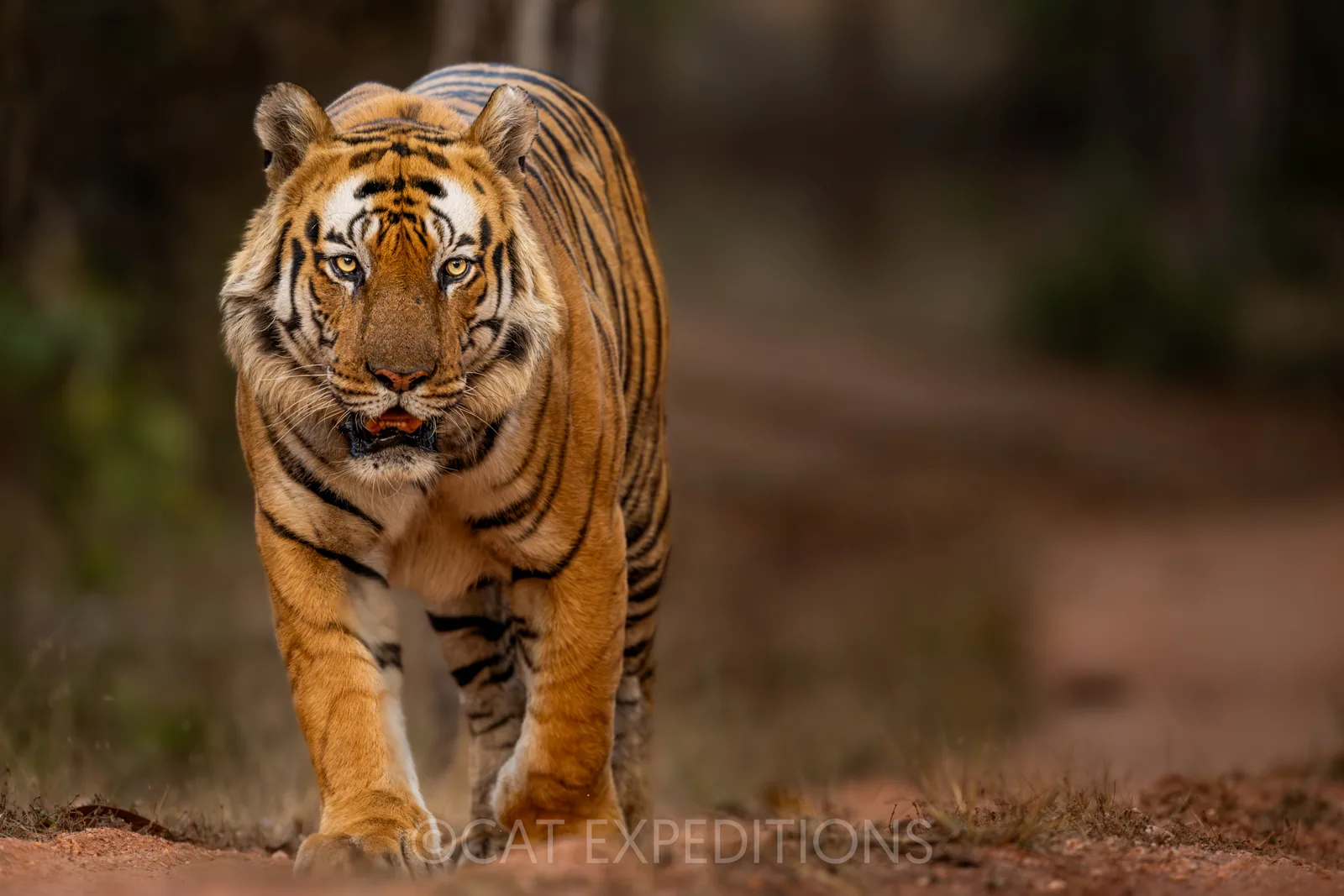
We finished the day with another sighting of a male tiger called Chota Bimh, who walked right at our vehicle down the road, giving us some beautiful photographic opportunities.
Day 7: When we first entered the park at sunrise, we heard alarm calls from the langurs. Based on where they were looking, the predator was very close by, and their alarm was specific to a leopard (langurs make different alarm calls for a leopard versus a tiger, which is pretty darn cool). The forest was sparse and visibility was good, so it was mind-boggling that we couldn’t spot the leopard anywhere. Then, just for a moment, a very camouflaged leopard revealed itself, walked away, and we never saw it again. Just the presence of this unique subspecies of leopard nearby got our adrenaline pumping.
Just fifteen minutes later, we come to a screeching halt. Our guide Harsh had spotted a female tigress (one of Dotty’s sub-adult cubs) in full stalk position. Just her ears were visible. She had her sights on a small herd of chital, still unaware of her presence. She moved forward slowly and silently, until one of the chital spotted her and sounded the alarm. Her hunt was over, but it was fantastic to see the behavior. She moved into the thickets to try her luck somewhere else.
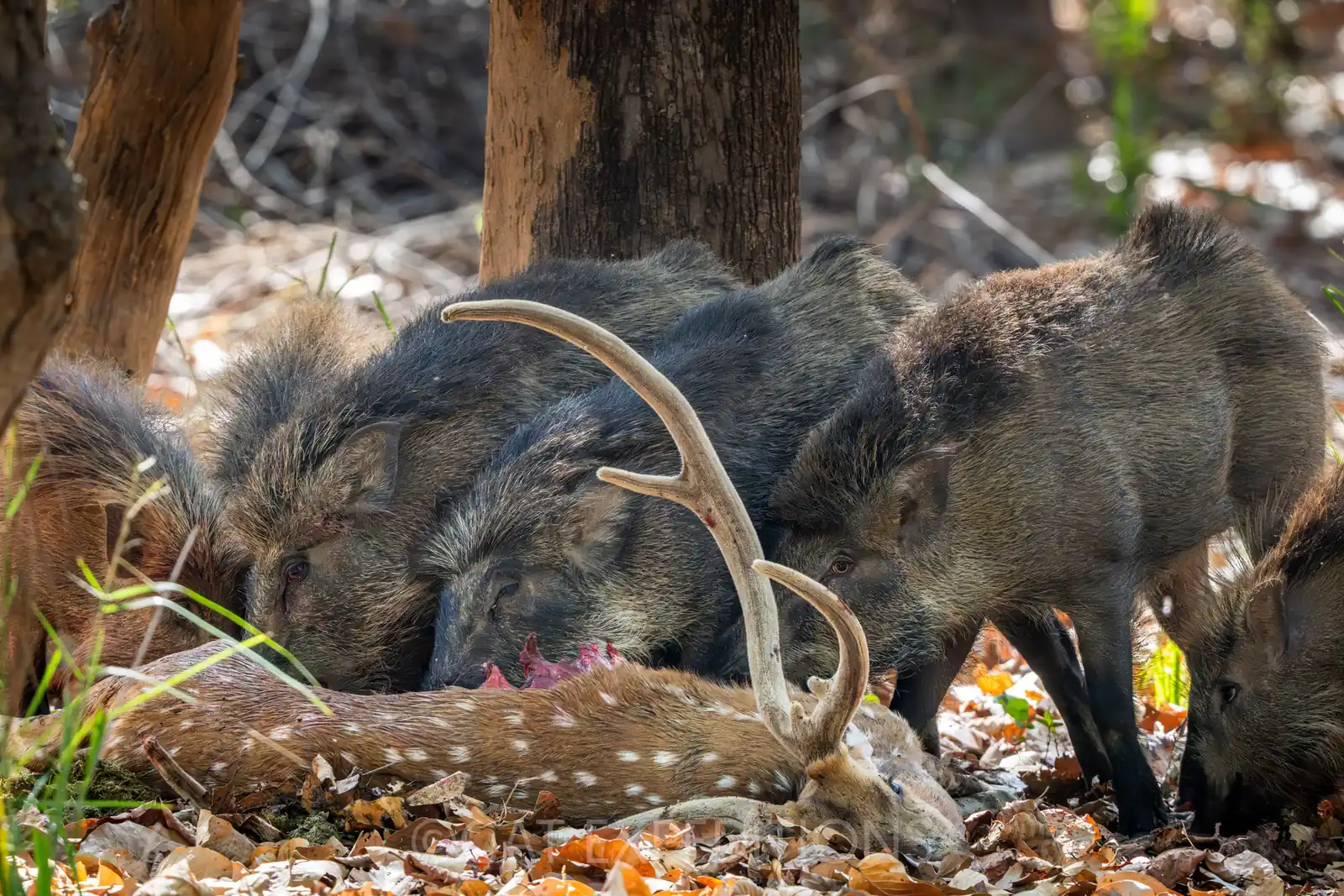
After our breakfast stop, passed the same area we had seen the flash of a leopard, and found a fresh kill, probably killed right around the same time we’d stopped for the leopard. It was a spotted deer, and a pair of Golden Jackals were taking advantage of the meal, clearly alert and nervous that its owner was nearby. After the jackals fed, a sounder of Wild Boar showed up and finished the entire carcass in less than five minutes, quite something!
The afternoon brought two more tigers. We found D1 resting on the road, and come sunrise, he got up and headed to a large watering hole, giving us some wide angle shots. At the very end of the drive, we also spotted Sid Baba’s female sub-adult cub stalking, although without a successful hunt.
Day 8: The morning safari was the last in Bandhavgarh, and we spent it watching Green Bee-eaters chasing their flying insect prey, while waiting for a tiger to emerge from the thickets, as alarm calls sounded around the area. Sadly, it stayed concealed, and it was time for us to pack up and make the drive to Kanha National Park. All National Parks are closed in the afternoon on Wednesdays, so we always strive to use this as our travel day and avoid missing a game drive The 5-hour drive to Kanha was filled watching daily village life fly by our car windows. Tarun and Dimple, our friends who run Kanha Jungle Lodge greeted us with their staff and we immediately felt right at home, as always. Dinner was absolutely delicious and the company delightful, and we went to bed with full hearts and happy stomachs.
Day 9: Kanha Tiger Reserve was the inspiration for Rudyard Kipling’s Jungle Book and it is a place we love for its dense Sal forest, interspersed with stunning grass-filled meadows. Immediately upon entering the park we were greeted by Barasinga, or swamp deer, which have bounced back from the brink of extinction.
Shortly after photographing these ungulates, we found the tigers that would become the instant highlight of the trip: a mother tigress (DJ-8) and her two sub-adults, who would soon disperse from their mother’s territory. At first, a the cubs and their mother were resting in an open meadow, until another male tiger emerged from the thicket across the way. The male cub and the male, who we learned was their father, DB-3, greeted each other warmly; it was interesting to watch the cub scent-marking a nearby tree during this greeting, a territorial display. Then came what felt like a game of whack-a-mole, with one tiger appearing out of the thickets before quickly disappearing again, and the next would do the same thing. Finally, the mother and her two cubs walked right past our vehicle, giving us a better look at their remarkable size. They quenched their thirst at a nearby waterhole were they slept, mostly out of view for the rest of the day, showing themselves a few more times at dusk.
We finished the day munching on spiced popcorn and watching Tigerland, a documentary featuring our guide, Tarun, and the conservation work and legacy in Kanha.
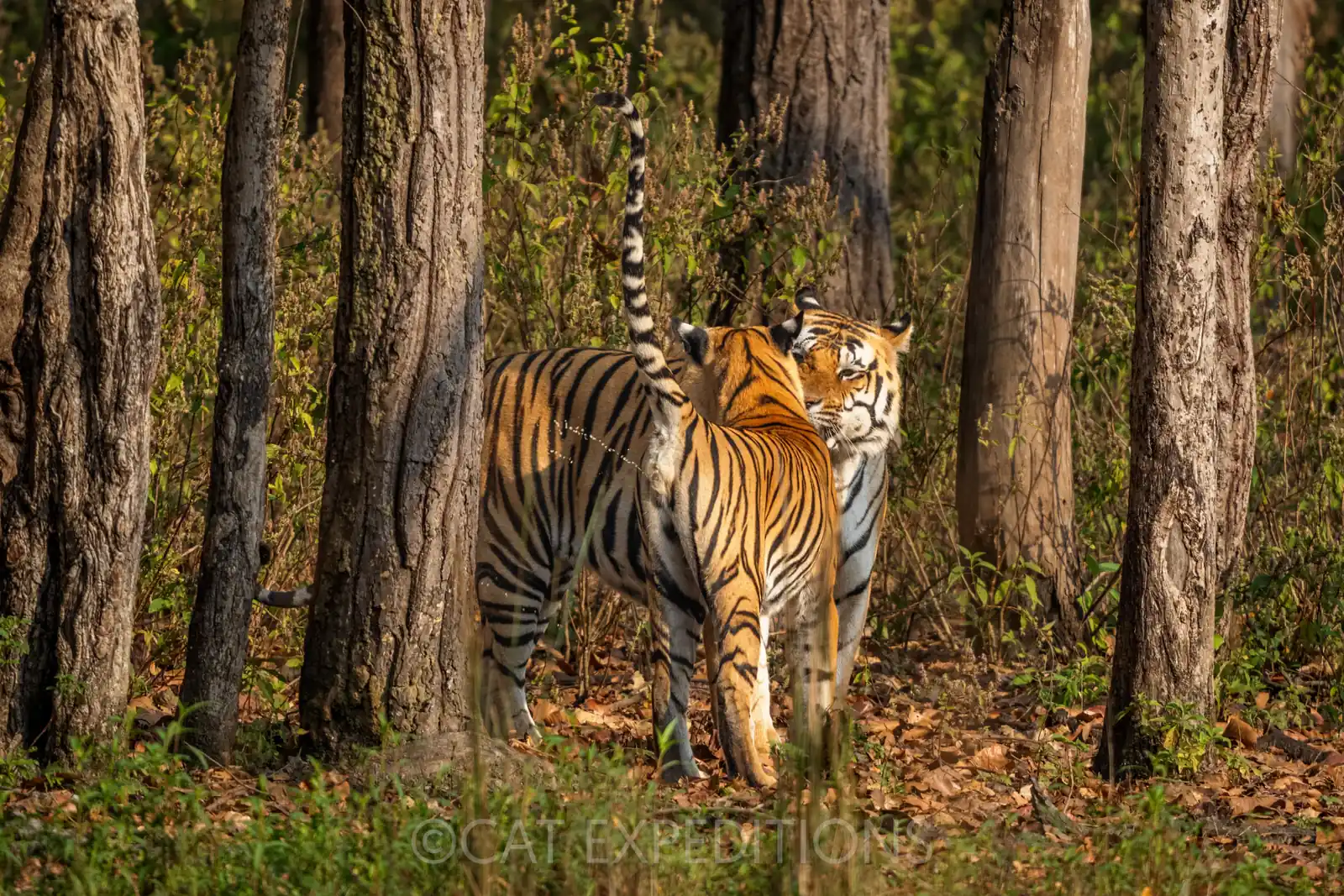
Later that day, we watched their mother come and drink and a waterhole, while a male tiger (DB-3) crossed the road briefly nearby. It was a very cat-filled day that none of us will ever forget! As we were driving out of the park, at day’s end we glimpsed a sloth bear in the distance, but due to the very strict restrictions about return time, we could not hang around for a better view. No matter, we were riding high on our incredible tiger sighting!
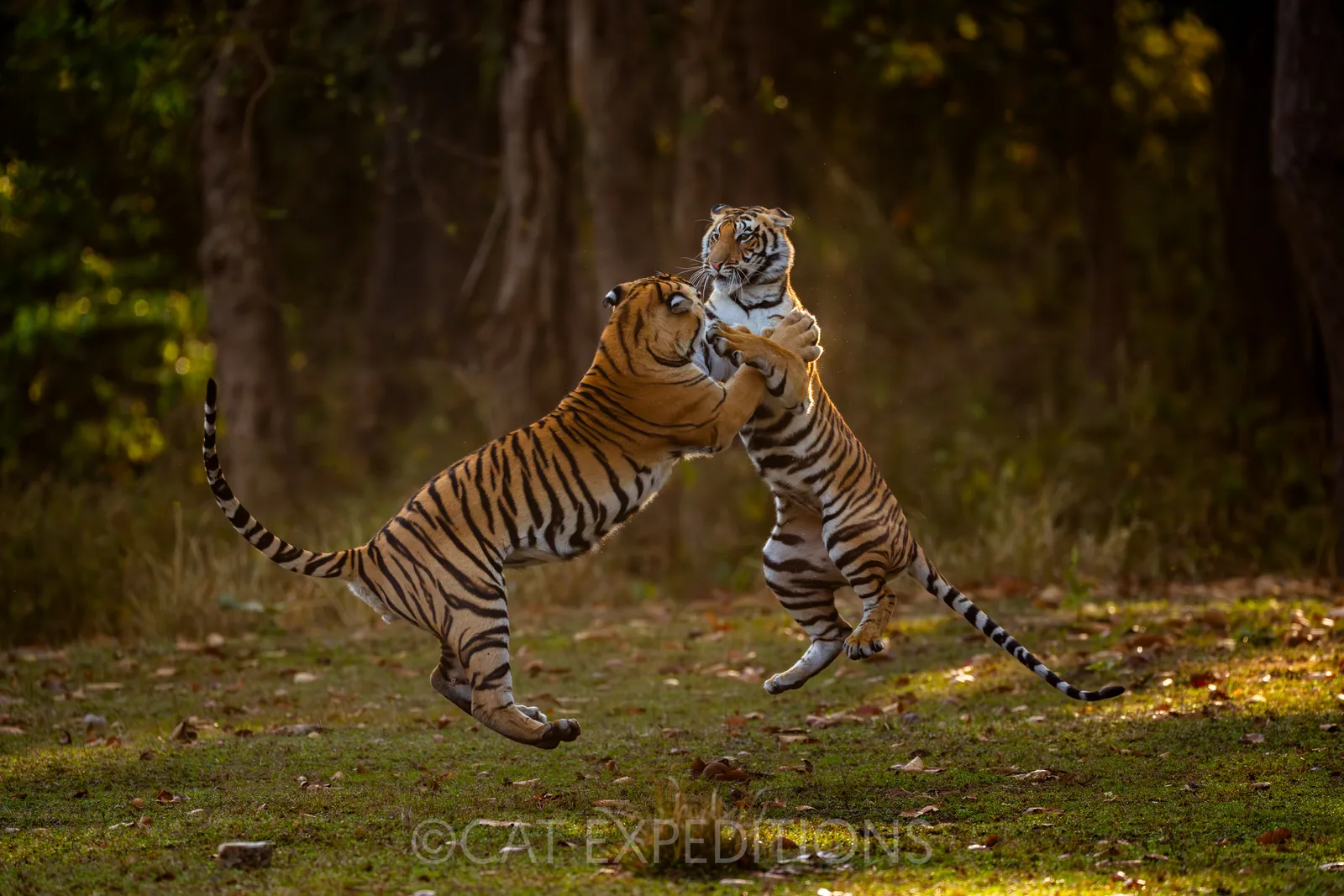
Day 10: Perhaps the best morning of the trip. After finding the mom, DJ-8, walking towards the same waterhole from the previous day, we found the two sub-adults close by, in a big meadow where they were actively looking for prey. They were typical uncoordinated, overeager ‘kids’, chasing after a barking deer well before it was close enough to make a proper attempt. With all that pent up energy from a failed hunt, they began to run and chase each other, playing and pawing at each other, once completely jumping into midair while swatting their paws at each other. They chased each other a few more times, before settling down as the morning sun rose higher in the sky.
Later that day, we watched their mother come and drink and a waterhole, while a male tiger (DB-3) crossed the road briefly nearby. It was a very cat-filled day that none of us will ever forget! As we were driving out of the park, at day’s end we glimpsed a sloth bear in the distance, but due to the very strict restrictions about return time, we could not hang around for a better view. No matter, we were riding high on our incredible tiger sighting!
Day 11: With our last full day permit, we wanted to explore the different zones of Kanha as much as possible. We had a brief leopard sighting in the morning, before heading to Zone 2 to check out its vast grasslands. This area is beautiful, though less-visited, so we took our time watching birds like Indian Peafowl males displaying, White-throated Kingfishers, and Indian Rollers. We saw a couple of Blackbuck, who are known to roam this specific zone of the reserve. After a yummy, casual lunch at the extensive ranger station of Zone 2, we started our way back to Zone 1, where a male tiger had been spotted in the morning (we had seen the footprints of the female and the two sub-adults in the morning, but hadn’t seen them).
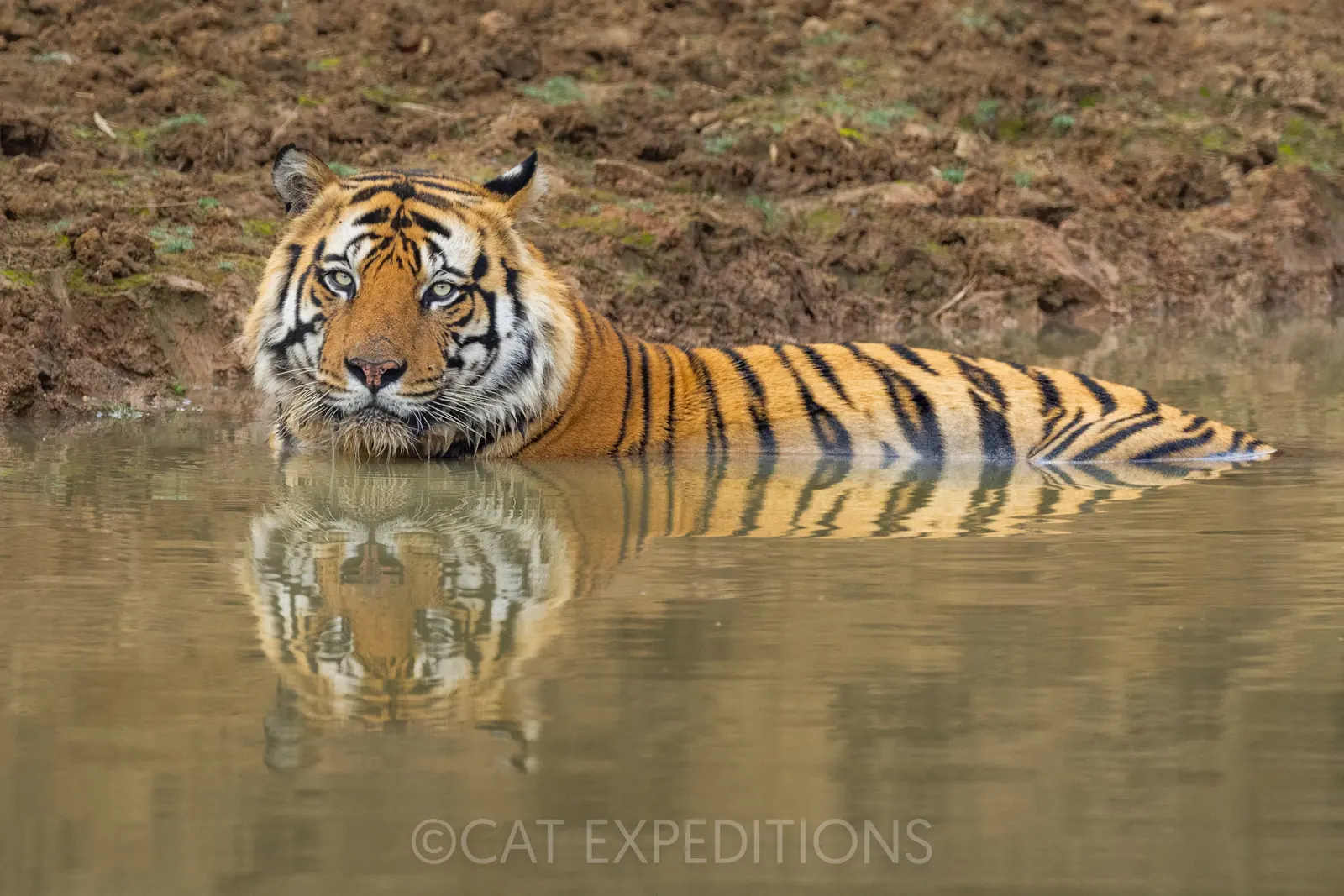
As we drove through a large meadow, we spotted two tigers walking in the middle of it, seemingly headed to a distant waterhole we couldn’t access. It was a distant, but beautiful cat. Not long after, we spent time with the tiger Patta Walla who was resting in the water, treating us to a beautiful reflection as the sun went down.
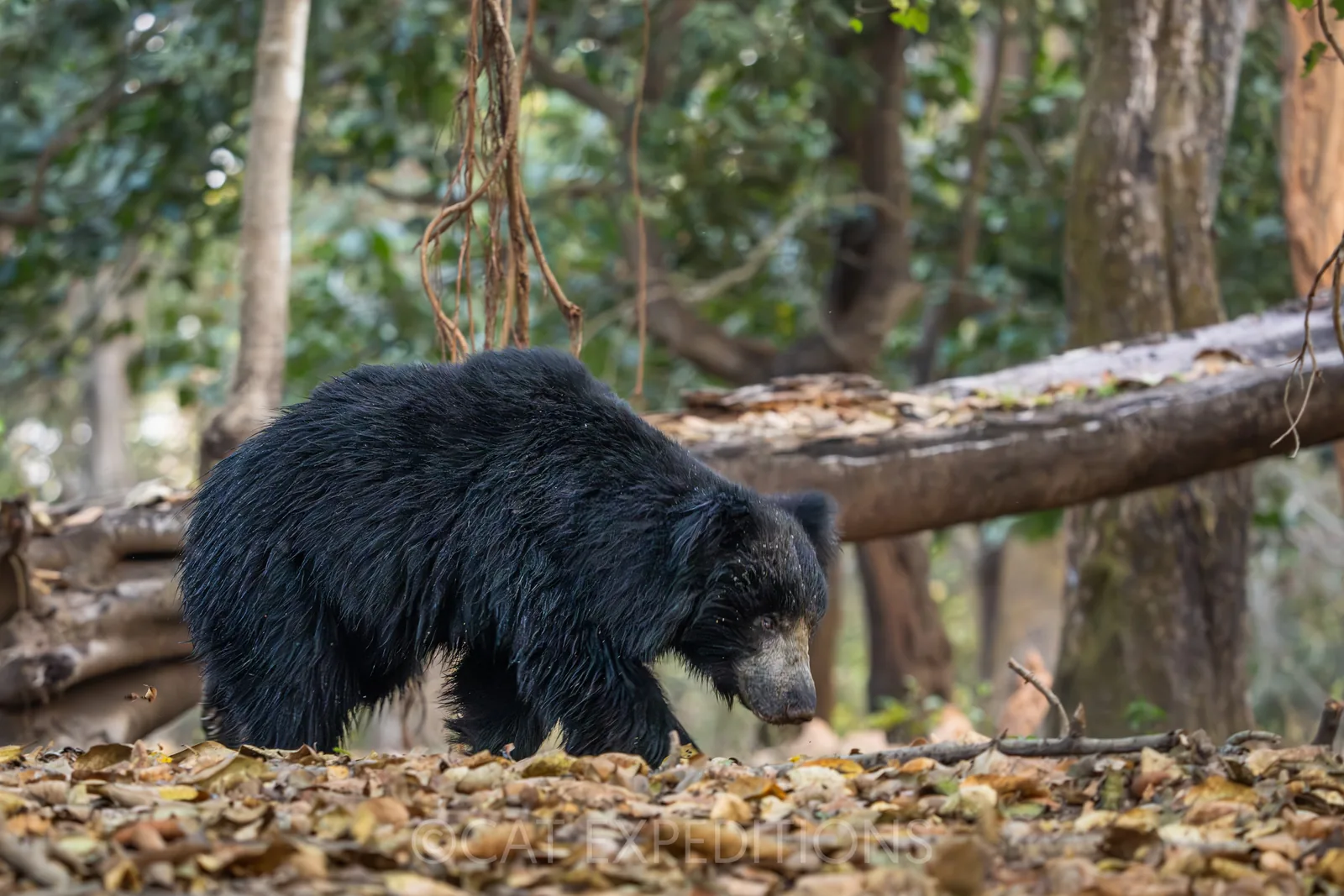
With such good tiger sightings in the last few days we decided to try for a better sloth bear opportunity, something both of our guests were hoping for. We drove through areas where trees were fruiting, suspecting bears would be attracted to this food source. The sun was very low on the horizon when we spotted a bear in the distance. Luckily, it was making its way towards us, so we just waited. It moved slowly, but purposefully, in our direction, building our anticipation. The sun had by now gone down, but with our full day permit, we were allowed to stay an extra fifteen minutes after the other Jeeps. A few more minutes passed and finally the bear walked right by us, just a mere twenty yards away. Our patience had paid off, getting a beautiful, unobstructed view of this often very difficult to see species. We were all elated! On the way out of the park, we would get one last tiger sighting, a male tiger crossing the road right as we happened to pass by.
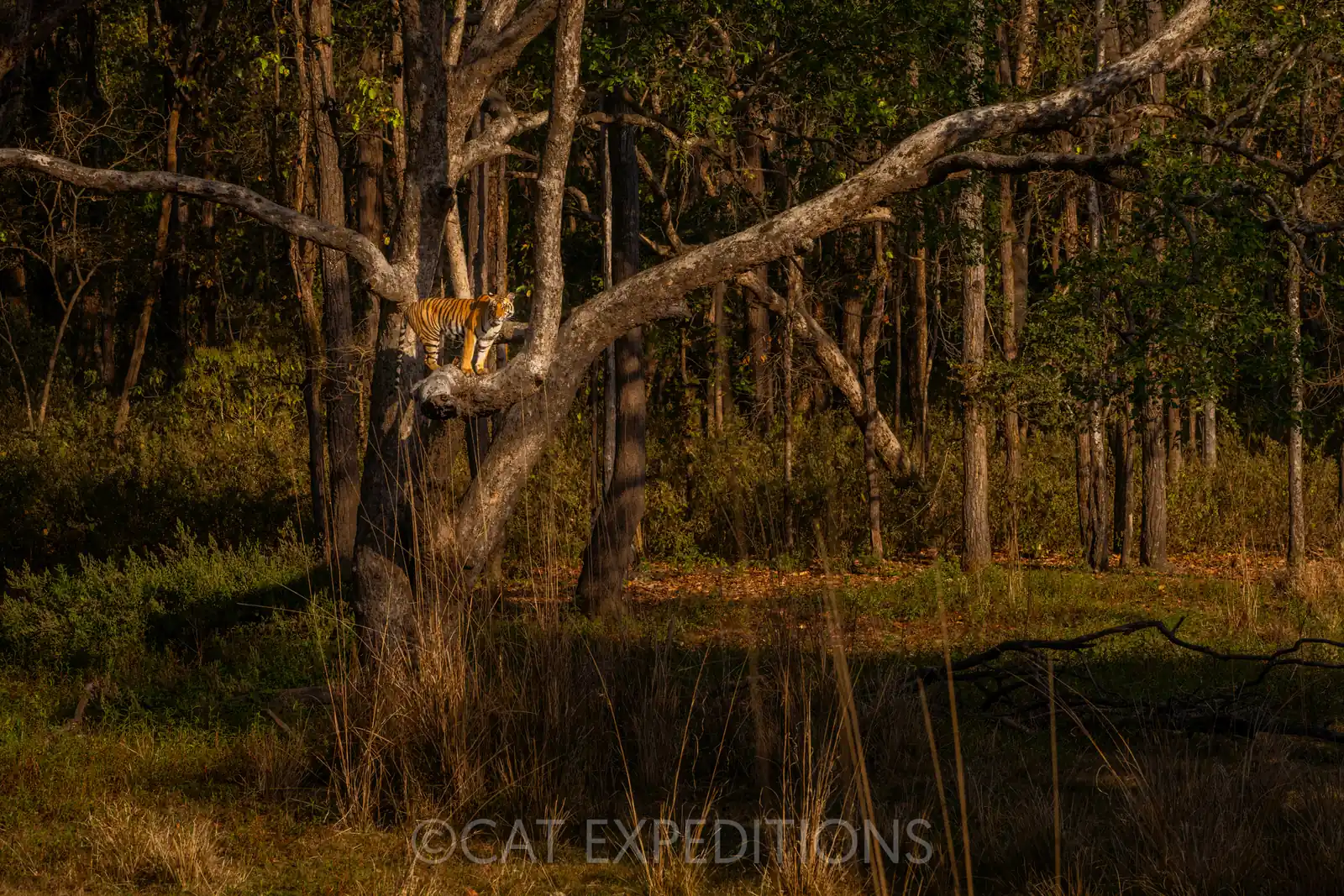
Day 12: This would be our last morning on tiger safari, and it was a spectacular way to end the trip. Our favorite mother and cubs re-emerged, and spent time in an area close to the road, which allowed for great photographic opportunities (off-roading is not permitted on tiger reserves in India.) The female cub was resting in a small creekbed, when she herd her brother rustling through the grass in the distance. She got up and went into stalking mode, using the cover of the creek to inch closer to him, before charging him in a full sprint. They met, and once again leaped into the air swatting at each other. Though the greeting was a bit obscured due to the tall grass, but what happened next blew our minds. The male disappeared into the tall grass, with the female seemingly having lost his whereabouts. She walked slightly in his
direction and then decides to climb a tree — maybe to get a better vantage point to look for him! Tigers are not known to climb trees regularly, so this was an extremely special sighting. We couldn’t believe our eyes and just kept snapping away. We had enough time with the female sub-adult tiger in the tree to reminded our guests to think about different compositions, and possibly zooming out more to show more of the landscape. After about three minutes the female climbed back down and started to walk towards her brother. He, a few seconds later, jumped into his own tree, getting a higher vantage point on his sister. The whole thing seemed surreal and we all took thousands of photos. It was the perfect end to our tiger photo tour, which was absolutely filled with stunning sightings.
After returning to the lodge to have brunch and pack up, we made our way to Raipur airport, for our flight back to New Delhi. Some of us connected to our international flights onward.
Day 13: For our guests who spent the night in New Delhi, they enjoyed the lavish breakfast at Andaz Delhi Hotel before their onward international flights.
Tigers of India Photo Tour 2024 Species List
Mammals
| Asian Elephant | Elephas maximus |
| Indian Hare | Lepus nigricollis |
| Northern Plains Grey Langur | Semnopithecus entellus |
| Rhesus Macaque | Macaca mulatta |
| Five-striped Palm Squirrel | Funambulus pennantii |
| Madras Treeshrew | Anathana ellioti |
| Chital | Axis axis |
| Barasingha | Rucervus duvaucelii |
| Sambar | Rusa unicolor |
| Southern Red Muntjac | Muntiacus muntjak |
| Gaur | Bos gaurus |
| Nilgai | Boselaphus tragocamelus |
| Blackbuck | Antilope cervicapra |
| Wild Boar | Sus scrofa |
| Sloth Bear | Melursus ursinus |
| Ruddy Mongoose | Urva smithii |
| Jungle Cat | Felis chaus |
| Leopard | Panthera pardus |
| Tiger | Panthera tigris |
| Golden Jackal | Canis aureus |
Birds
| Lesser Whistling Duck | Dendrocygna javanica |
| Gadwall | Mareca strepera |
| Asian Pygmy Goose | Nettapus coromandelianus |
| Indian Peafowl | Pavo cristatus |
| Red Junglefowl | Gallus gallus |
| Red Spurfowl | Galloperdix spadicea |
| Painted Spurfowl | Galloperdix lunulata |
| Little Grebe | Tachybaptus ruficollis |
| Yellow-legged Green Pigeon | Treron phoenicopterus |
| Indian Nightjar | Caprimulgus asiaticus |
| Greater Coucal | Centropus sinensis |
| Common Hawk Cuckoo | Hierococcyx varius |
| Lesser Adjutant | Leptoptilos javanicus |
| Painted Stork | Mycteria leucocephala |
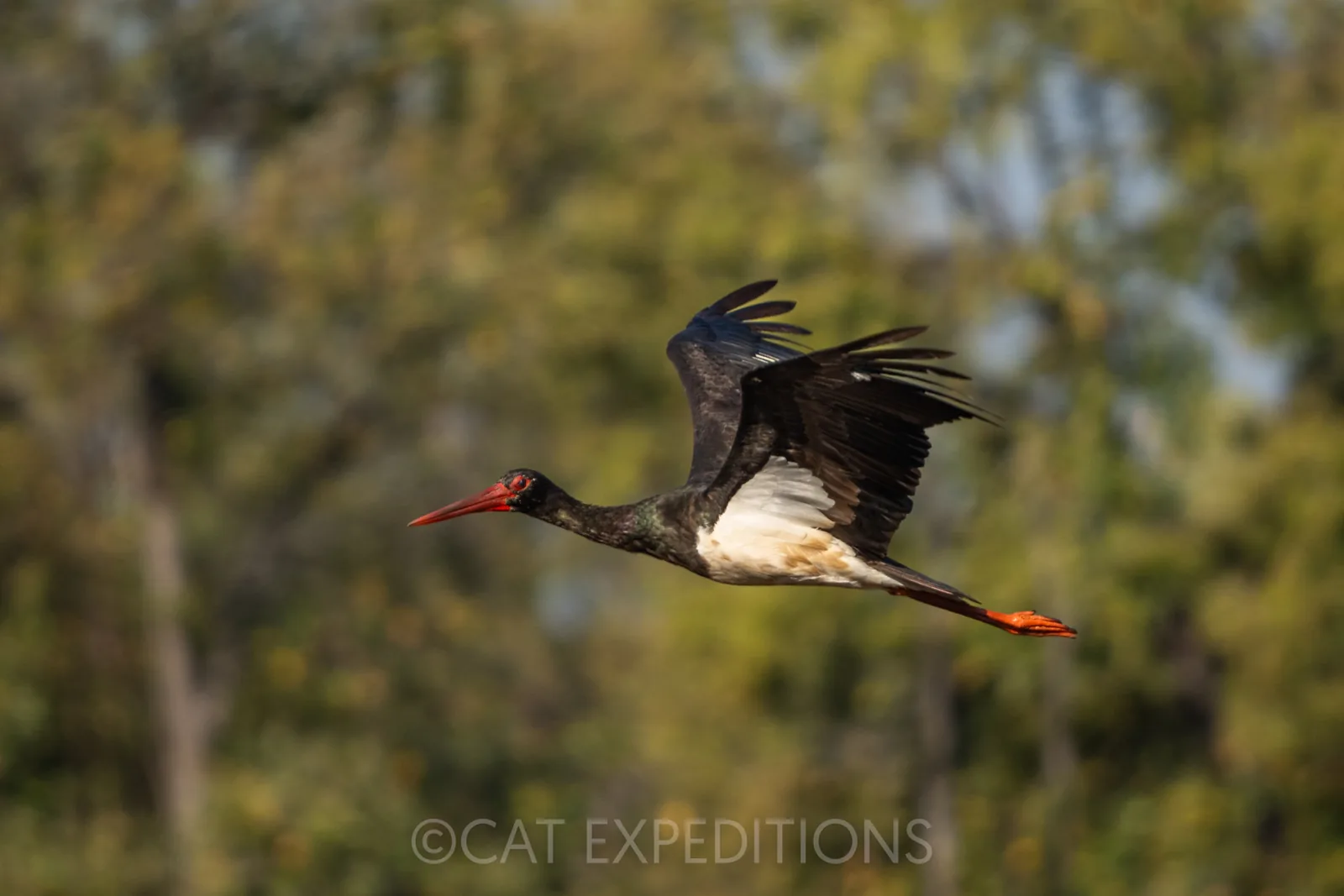
| Black Stork | Ciconia nigra |
| Woolly-necked Stork | Ciconia episcopus |
| Indian Pond Heron | Ardeola grayii |
| Intermediate Egret | Ardea intermedia |
| Little Egret | Egretta garzetta |
| Little Cormorant | Microcarbo niger |
| Great Thick-knee | Esacus recurvirostris |
| Red-wattled Lapwing | Vanellus indicus |
| Green Sandpiper | Tringa ochropus |
| Black-winged Kite | Elanus caeruleus |
| Crested Serpent Eagle | Spilornis cheela |
| Short-toed Snake Eagle | Circaetus gallicus |
| Red-headed Vulture | Sarcogyps calvus |
| Indian Vulture | Gyps indicus |
| Griffon Vulture | Gyps fulvus |
| Changeable Hawk Eagle | Nisaetus cirrhatus |
| Shikra | Accipiter badius |
| White-eyed Buzzard | Butastur teesa |
| Jungle Owlet | Glaucidium radiatum |
| Spotted Owlet | Athene brama |
| Indian Scops-Owl | Otus bakkamoena |
| Brown Fish Owl | Ketupa zeylonensis |
| Malabar Pied Hornbill | Anthracoceros coronatus |
| Indian Grey Hornbill | Ocyceros birostris |
| Common Hoopoe | Upupa epops |
| Black-rumped Woodpecker | Dinopium benghalense |
| White-naped Woodpecker | Chrysocolaptes festivus |
| Brown-headed Barbet | Psilopogon zeylanicus |
| Coppersmith Barbet | Psilopogon haemacephalus |
| Blue-bearded Bee-eater | Nyctyornis athertoni |
| Green Bee-eater | Merops orientalis |
| Indian Roller | Coracias benghalensis |
| Common Kingfisher | Alcedo atthis |
| White-throated Kingfisher | Halcyon smyrnensis |
| Plum-headed Parakeet | Psittacula cyanocephala |
| Alexandrine Parakeet | Psittacula eupatria |
| Rose-ringed Parakeet | Psittacula krameri |
| Small Minivet | Pericrocotus cinnamomeus |
| Large Cuckooshrike | Coracina javensis |
| Black-hooded Oriole | Oriolus xanthornus |
| Indian Golden Oriole | Oriolus kundoo |
| Common Woodshrike | Tephrodornis pondicerianus |
| Black Drongo | Dicrurus macrocercus |
| White-bellied Drongo | Dicrurus caerulescens |
| Greater Racket-tailed Drongo | Dicrurus paradiseus |
| Long-tailed Shrike | Lanius schach |
| Large-billed Crow | Corvus macrorhynchos |
| Black-naped Monarch | Hypothymis azurea |
| Purple Sunbird | Cinnyris asiaticus |
| Golden-fronted Leafbird | Chloropsis aurifrons |
| Grey-breasted Prinia | Prinia hodgsonii |
| Wire-tailed Swallow | Hirundo smithii |
| Red-vented Bulbul | Pycnonotus cafer |
| Oriental White-eye | Zosterops palpebrosus |
| Puff-throated Babbler | Pellorneum ruficeps |
| Jungle Babbler | Turdoides striata |
| Indian Salpornis | Salpornis spilonota |
| Brahminy Starling | Sturnia pagodarum |
| Oriental Magpie Robin | Copsychus saularis |
| White-rumped Shama | Kittacincla malabarica |
| Red-breasted Flycatcher | Ficedula parva |
| Eastern Stonechat | Saxicola maurus |
| Grey Bush Chat | Saxicola ferreus |
Places visited in this report
This trip report was written by Cat Expeditions and is reproduced with their permission, with their photographs. See the original report on catexpeditions.com for their trips and more reports. To join this trip, see Tigers of India Photo Tour, Cat Expeditions. Back to resources.